The Pleasure of Rewatching Significant Audiovisual Works
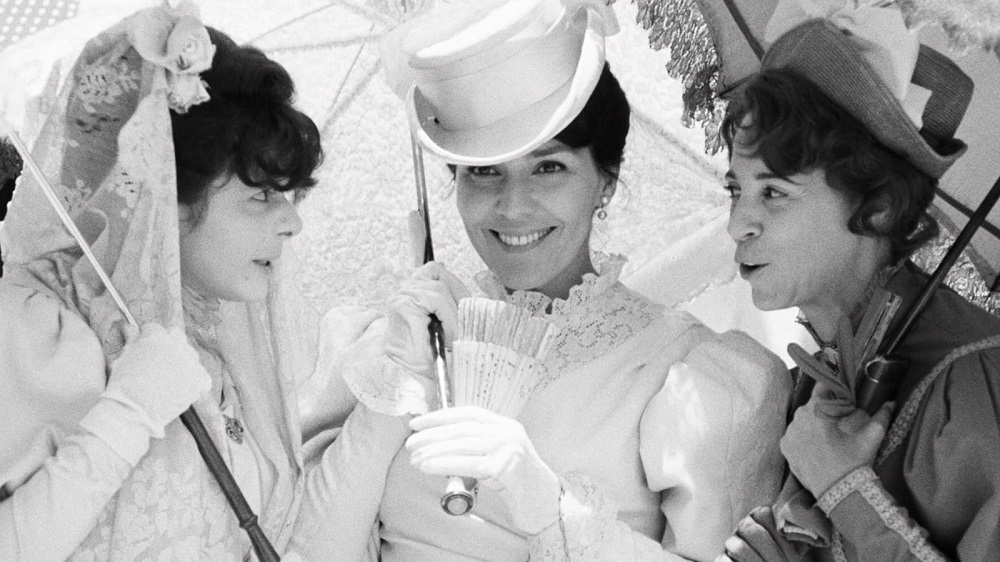
At times, revisiting films, television series, and other audiovisual productions encourages a more deliberate contemplation of their respective creative processes; it renews our creative perspective and restores knowledge that functions as part of our shared social heritage.
Let us reflect on the value offered by a second viewing of works rich in thematic and aesthetic substance.
In today’s era of cultural communication, fictional narratives incorporate messages and codes designed to capture the interest and fascination of diverse audiences.
Who has not recalled deeply moving audiovisual moments because of the way an actor or actress conveyed them? A gesture, the intention behind a brief line of dialogue, or a soft, understated smile all form part of the creative act we need to witness on screen in order to better understand ourselves.
An inner conflict, a piercing gaze, or a stifled cry often express far more than a line of dialogue devoid of meaning. All of this must be present in the visualization of the scene if it is to move the viewer who remains attentive to another human being transformed into a character.
This was eloquently demonstrated in both film and television by the leading actress Raquel Revuelta. Recently, on the occasion of her centenary, she received tributes from academic circles and from friends who regarded her as an acting benchmark.
Such “discoveries” often occur when we analyze in depth the art of storytelling. This art demands mastery of dramaturgy, performance direction, and staging. None of these disciplines allows for improvisation. In the creative process, each is essential; they form part of the dramatic genre chosen and of the underlying premise that guides the development of the film, series, soap opera, or short.
The essence of artistic narratives is not expressed explicitly, but rather through iconic and linguistic signs—including silence, which so often speaks loudly to us—if only we perceive and interpret it.
Let us appreciate the teachings of the master Konstantín Stanislavski, who reminded us: “The objective of art is not merely to create the life of the human spirit in the role to be performed, but to convey it externally in an artistic form.”
We must not forget that every work of fiction carries within it an implicit philosophical theory that must be deciphered and reinterpreted as part of a broader corpus. We need only remain attentive.
Translated by Luis E. Amador Dominguez