Alhambra Theatre: The End of an Era
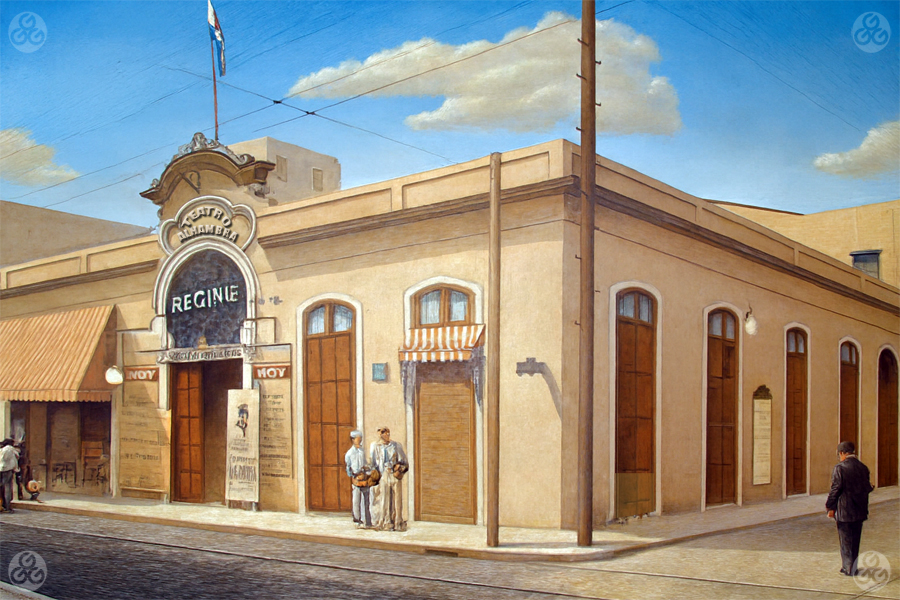
On February 18, 1935, the cultural heart of Havana seemed to pause for a moment. That day, the façade of the legendary Alhambra Theater collapsed—physically, but also symbolically. With its collapse came the end of more than four decades of history, silencing a stage that had served as the cradle of Cuban popular theatre and a mirror in which the nation saw itself, laughed, and recognized its own reflection.
The Alhambra’s cultural significance lay in its commitment to a genre seemingly minor yet profoundly resonant: costumbrista theatre rooted in popular tradition. Far from intellectual elites, the Alhambra forged its identity through more than five thousand works that portrayed, with humor and mischief, the idiosyncrasies of ordinary Cubans.
Its productions functioned as a social barometer in which colloquial language, music, and dance blended to create a cultural product that was authentic and deeply democratic. Its greatest achievement was rejecting imposed models and highbrow genres and, in an act of genuine creativity, appropriating their elements and transforming them into something original and distinctly its own.
On its stage, life was represented through stock characters who became national archetypes. Audiences applauded with fervor its vedettes, recognized themselves in the clever antics of the negrito and his proverbial wit, smiled at the caution of the gallego, idealized the exuberant figure of the mulata, and reflected on the veiled critiques of the bobo.
Actors and actresses did more than perform: they brought to life a gallery of personalities often inspired by real individuals, exaggerating their traits to provoke laughter while also eliciting the complicity of the audience. Entire ensembles devoted themselves to this style, forging a genuine school of performance in which expressiveness and connection with spectators were the highest virtues.
The Alhambra’s relevance extended beyond its walls, attracting major figures of Spanish‑language literature. The venue became a virtually obligatory stop for distinguished visitors who saw in it the most vivid expression of popular sentiment. Personalities such as Rubén Darío, Vicente Blasco Ibáñez, Ramón María del Valle‑Inclán, Jacinto Benavente, and Federico García Lorca were among its spectators, captivated by a theatrical phenomenon unmatched elsewhere. The perspective of these playwrights and writers—some of whom would forever transform Spanish-language literature—was undoubtedly marked by the freshness and authenticity of what they witnessed there.
The Alhambra’s success rested on both the quality and quantity of its librettos and the charisma of its performers. Among its writers, chroniclers of their time, were Federico Villoch, author of more than 386 works ranging from sainetes to parodies and revues—earning him the nickname “the Lope de Vega of Consulado Street”; Francisco and Gustavo Robreño, creators of unforgettable sainetes such as Delirio en automóvil and El velorio de Pachencho, one of the most frequently staged Cuban plays; as well as iconic librettists such as Ramón Morales, Ignacio Sarachaga, Manolo Saladrigas, Félix Soloni, and Gustavo Sánchez Galarraga.
Notable performers who graced the Central Havana stage included Sergio Acebal Gener and Arquímedes Pous, famed for portraying the negrito, counterpart to the gallego embodied by Ramón Espígul; and Blanca Becerra, an actress of astonishing versatility who could portray everything from a young Black woman to a Galician woman or a gossiping old lady, and who was the first performer of the song Quiéreme mucho.
Behind the curtain stood Regino López—actor, impresario, and director of the Alhambra’s resident company—a man overflowing with Creole humor despite having been born in Spain. Also notable was Jorge Anckermann, a pivotal composer and musician who joined the theatre in 1911; his music became a central element of its productions, and he is credited with more than three thousand compositions.
When the Alhambra’s façade collapsed that February, it was not only a building that fell. An entire world of characters, laughter, and social critique that had entertained and defined generations of Havanans came crashing down. The event definitely lowered the curtain on the longest and most authentic theatrical season in Cuban history. A worthy counterpart to its namesakes in Granada and Madrid, the end of Havana’s Alhambra truly marked the end of an era: that of Cuban género chico at its height—an era that lived and died on a stage that, though gone, endures in Cuba’s cultural memory.
Translated by Luis E. Amador Dominguez