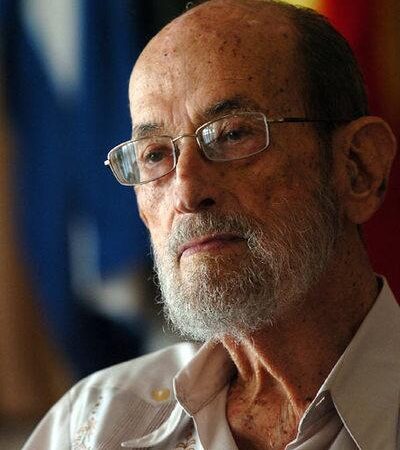
Víctor Casaus and the Construction of Memory in the Heart of Havana
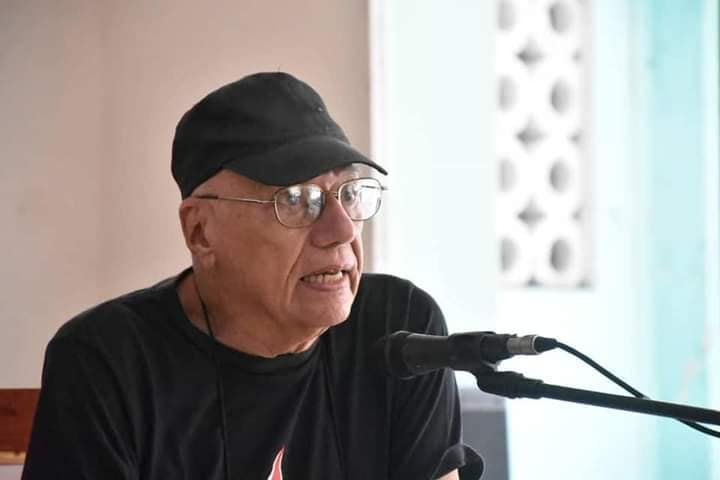
He does not view his path as solitary. “Víctor Casaus does not know how to walk alone. He never could—nor did he ever try—to take steps into the void without looking back, toward others and alongside others,” wrote the Argentine magazine Sudestada when introducing an interview with the Cuban poet and filmmaker. That collective spirit—this way of understanding culture as a fabric woven from voices and affections—defines the work of one of the island’s most versatile intellectuals.
A graduate in Hispanic Language and Literature from the University of Havana, Casaus belongs to the poetic generation that emerged in the mid‑1960s in the pages of El Caimán Barbudo, the iconic monthly magazine of which he was a founding member. His signature, however, soon extended beyond poetry into film, journalism, testimonial writing, and cultural management. In his work, genres converse and blend with the same natural ease with which he moves from a documentary film to a love poem.
By the 1970s, he was already a recognized name. He had published his first poetry collection, Todos los días del mundo (1967), and had begun writing screenplays for the Cuban Film Institute (ICAIC). He contributed to films such as El hombre de Maisinicú (1973) and would later direct feature-length fiction films, including Como la vida misma (1985) and Bajo presión (1989). Yet it is his documentaries—more than twenty in total—that reveal his persistent drive to capture the pulse of history and the voices of its anonymous protagonists.
Works such as Con Maiakovski en Moscú (1976), Un silbido en la niebla (1977), and Que levante la mano la guitarra (1983)—the latter made in collaboration with Luis Rogelio Nogueras—move along the delicate frontier between journalistic record and poetic sensibility. For Casaus, the camera is also a form of writing.
If there is one book that marked a turning point in his career, it is Girón en la memoria (1971). One of the first works to receive a mention in the newly established Casa de las Américas Prize’s Testimony category, the book reconstructs the events of the Bay of Pigs invasion through the voices of those who participated. The jury that year—comprising Rodolfo Walsh, Raúl Roa, and Ricardo Pozas—recognized the value of a work that, as historian Pedro Pablo Rodríguez notes in the prologue to a later edition, confirmed the author’s “coming of age within the national culture.”
The book’s final fragment, recounting the desperate takeoff of a pilot under bombardment, illustrates Casaus’s ability to fuse epic breath with the human dimension of storytelling: “The cockpit was full of dew. I switched on every control in the aircraft—heating, everything. Every switch up. I entered the runway and took off.” That direct voice, free of artifice, became the hallmark of a writer who prefers to yield the floor to others.
In 1996, during Cuba’s Special Period, Casaus took a new turn in his career. Together with Argentine collaborator María Santucho, he founded the Pablo de la Torriente Brau Cultural Center, an independent, non‑profit institution located in the heart of Old Havana. The space, at Muralla 63, would become a hub for projects devoted to memory, the trova musical tradition, and new technologies.
The choice of name was no coincidence. Pablo de la Torriente Brau—the Puerto Rican‑Cuban writer and journalist who died during the Spanish Civil War—represented the ideal of the committed intellectual. Casaus had already dedicated both a documentary feature (Pablo, 1978) and a book (Pablo: con el filo de la hoja, 1983) to him. But the Center took that devotion a step further: it sought not only to preserve his legacy, but also to create the conditions for new voices to emerge.
“What we do at the Pablo Center—a dozen cultural programs, often interconnected—is made possible by the extra dedication of the few of us who are there every day and by the collaboration of those who support these dreams with their work,” Casaus explained in an interview. He added a reflection that illuminates his philosophy: “In my case, I have had to adjust, as best I could, the tensions between cultural work and the demands of what might be called—quickly and somewhat inaccurately—one’s personal oeuvre. The first step in easing those tensions, or understanding them better, was realizing that the Pablo Center is itself part of that personal work.”
Under his direction, the institution has hosted initiatives as diverse as the project A guitarra limpia, a space devoted to the new Cuban trova, which, during its first decade, brought together troubadours from all generations in more than ninety concerts. Since 1999, the Center has also organized international salons and colloquia on Digital Art, a pioneering effort to explore emerging artistic languages on the island.
Despite the multiplicity of roles—poet, filmmaker, journalist, cultural promoter—Casaus maintains a perspective that seeks to preserve the freshness of childhood. In the interview cited earlier, he reflected on that tension: “Trying to maintain the gaze of children requires a difficult balance with lived experience—suffered and enjoyed—which tends to tip the scale toward routine and what is already known. Socially, it is equally difficult to sustain that insistence on the fresh visions of childhood. Yet there is a kinship between those ways of seeing and the search for hope, which may be battered and even badly wounded in these planetary times, but which from time to time still offers its flashes.”
His literary work—including poetry collections such as Amar sin papeles (1980), Los ojos sobre el pañuelo (1982), winner of the Rubén Darío Latin American Poetry Prize, and the deeply moving El libro de María (2001), introduced by Argentine poet Juan Gelman—converses with that same search. It is a poetry that, like his cinema, refuses to renounce wonder.
Translated by Luis E. Amador Dominguez