José Fornaris: The Indelible Legacy of a Cuban Romantic
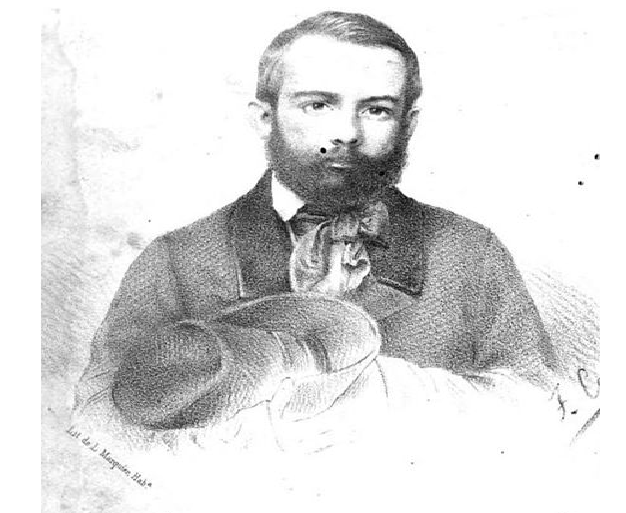
The pen that sang of the Siboneyes and ignited the flame of the homeland never wielded a rifle on the battlefield, yet it sowed the seeds of rebellion on paper. José Fornaris y Luque, born in the former town of Bayamo on March 18, 1827, was a man of paradoxes: a lawyer by profession, a poet by vocation, and an occasional conspirator, whose life unfolded on the tightrope of 19th-century colonial Cuba. Delving into his biography reveals an intellectual who, despite his close friendship and kinship with Carlos Manuel de Céspedes, chose not to take up arms when the Father of the Nation rose in La Demajagua in 1868, instead remaining in Havana and shortly thereafter embarking on an extended journey through Europe. Nevertheless, his contribution to the formation of Cuban national consciousness was primarily literary and profoundly influential.
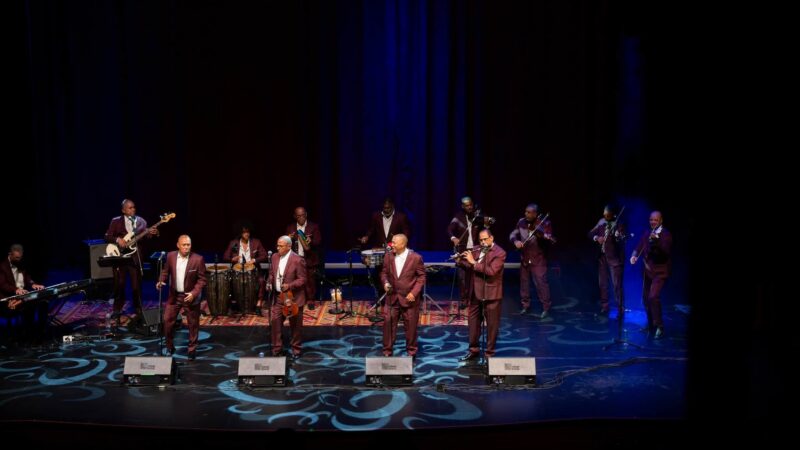
To grasp Fornaris’s significance, one must return to the night of March 27, 1851. At a window in Bayamo, in front of the beautiful Luz Vázquez, three men strummed a guitar and sang a song. This piece, known as La Bayamesa, resulted from an exceptional collaboration between Fornaris, Carlos Manuel de Céspedes, and Francisco del Castillo Moreno. Far from being a mere serenade, Fornaris’s lyrics, directed at the “gentil bayamesa,” became a symbol over time. Researcher and critic Cintio Vitier highlighted that the author’s brilliance lies in the soft, voluptuous, and paradisiacal tone of his poetry—a characteristic already evident in this early work. The song endures not only in popular repertoire but also established a lyrical precedent for the nation.
In 1855, Fornaris found his most authentic and, paradoxically, most subversive voice with the publication of Cantos del Siboney. On an island where the indigenous population had been nearly exterminated in the 16th century, the Bayamo poet had the audacity to resurrect them in verse. Through the idealized lives of the Siboneyes, Fornaris not only created a literary movement—the siboneyismo—but also constructed an allegory of Creole exploitation under Spanish rule. The success was overwhelming: the book went through five editions between 1855 and 1863, becoming a publishing phenomenon of the era. Colonial authorities quickly perceived the threat. Chronicles from the time recount that the Captain General summoned Fornaris to his office and warned him disdainfully: “Go sing to the Indians somewhere else.”
Despite this success, Fornaris’s status as a poet has been the subject of critical debate. His work, especially Cantos del Siboney, oscillates between lyrical brilliance and technical irregularity. Esteemed literary critic José Antonio Portuondo described his poems as “incorrect even in rhyme and frequent prosaicism.” Yet he acknowledged that, despite these flaws, Fornaris succeeded in constructing the image of an “ideal primitive society, of purely romantic lineage.” This duality of form and content allowed him to connect with a wide audience, who found not only beauty but also a yearning for freedom in his verses. Fornaris also ventured into theater with works such as La hija del pueblo (also known as Lola la tejedora), capturing the vibrant customs and social tensions of colonial Cuba, demonstrating a dramatic craft that critics have equated with Gertrudis Gómez de Avellaneda.
Beyond his creative work, José Fornaris was a tireless cultural promoter. His work as a journalist and editor was essential in shaping mid-19th-century Cuban literary life. He founded publications such as La Piragua and co-directed Floresta Cubana, platforms that became forums for Creole thought. Alongside José Lorenzo Luaces, he compiled the celebrated anthology Cuba poética, a monumental effort to gather and give visibility to Cuban poets from the late 18th century to his own time. This dedication to systematizing and disseminating national literature solidified him as a committed intellectual, devoted to building a legacy. When the Ten Years’ War erupted, he was in Havana, and although he did not join the guerrillas, his pen never rested. He traveled to Spain, France, and Italy, and in Paris, to earn a living, he taught Literature, History, Latin, and Greek, spreading his knowledge across Europe.
José Fornaris passed away in Havana on September 19, 1890, devoted to teaching and letters. Reflecting on his life reveals a man who navigated the political storms of his time without compromising his commitment to Cuban identity. As artist Samuel Feijóo remarked, Fornaris was the creator of siboneyismo, a poetry of defiance, a man who, in his exaltation of all things Cuban, reached the heart of the island’s sky. Although he did not fight on battlefields, he waged a silent war through the pages of his books. By evoking the indigenous peoples, he spoke to Cubans about their own oppression; by singing to a beautiful Bayamo woman, he composed a melody for the dreamed homeland. In this paradox lies his enduring legacy, that of a poet who found a definitive place in the heart of Cuba.
Translated by Luis E. Amador Dominguez
Photos: Ministerio de Cultura