Ballet Español de Cuba Invites Audiences to Al Compás de Manuel de Falla
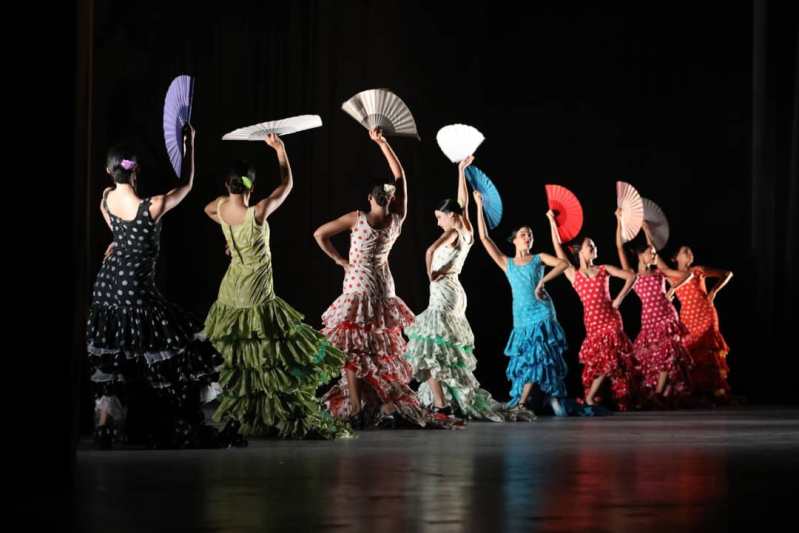
The Ballet Español de Cuba, directed by Maestro Eduardo Veitía, pays tribute to a celebrated creator and the “sonic architect” of a profound Spain with Al Compás de Manuel de Falla. The production will be presented at the Avellaneda Hall of Cuba’s Teatro Nacional on October 10 and 11 at 5:00 p.m.
The performances commemorate Hispanic Heritage Day, observed on October 12, and Cuban Culture Day, celebrated on October 20. They also mark the 150th anniversary of the birth of Manuel de Falla, who was born in Cádiz on November 23, 1876, and died in Alta Gracia, Argentina, on November 14, 1946.
The program offers audiences an opportunity to revisit Falla’s legacy through a selection that celebrates the richness, depth, and modernity of his work.
Eduardo Veitía’s choreography draws on emblematic pieces from Falla’s first, or Andalusian, period (1900–1919), when flamenco, cante jondo, and Andalusian musical cadences predominated. The program includes Siete canciones populares españolas, performed by soprano Milagros de los Ángeles Soto, pianist Vilma Garriga Comas, and dancers from the Ballet Español de Cuba. El amor brujo and El sombrero de tres picos will also return to the stage, reaffirming the enduring relevance of a composer whose music continues to illuminate the path of generations of artists.
In the program notes for these performances, journalist and art critic Toni Piñera writes:
“The history of the Ballet Español de Cuba, throughout its 39 years, has also been touched by the creative genius of this artist, who occupies a preeminent place in the history of Spanish music—not only as a composer, but also as a sonic imagination capable of revealing the Iberian Peninsula’s most intimate essence. His work does not merely describe the landscape; it builds and transfigures it. That is why many consider him a sonic architect.
“In Falla, two forces that might seem opposed coexist, yet he unites them with extraordinary mastery: popular Spain, with its Roma, Andalusian, ritual, and earthy roots; and a spiritual, ascetic, almost mystical Spain that turns inward. Manuel de Falla’s work forms a bridge between tradition and the avant-garde, between popular roots and the boldest forms of aesthetic exploration.”
Piñera adds:
“Throughout his career as a director and choreographer, Eduardo Veitía has created a body of work that constitutes an essential part of the company’s repertory. In this commemorative gala, these pieces return to the stage, revisited and enriched with new interpretations and nuances that respect their original essence.
“In Siete canciones…, the choreographer transforms the intimate, popular voice into danced gesture, revealing the emotional diversity contained in each song. El sombrero de tres picos unfolds its festive, theatrical, and vividly colorful character, evoking the vibrant Spain that Falla portrayed with such mastery. Meanwhile, El amor brujo, with its mystical atmosphere and celebrated “Ritual Fire Dance,” becomes a journey into the world of enchantment, superstition, and inner strength.
“As a choreographer, Veitía has learned to ‘read’ and ‘feel’ Falla’s music, infused with duende, lyricism, and a profound Andalusian sensibility that has inspired performers in every discipline. He has adapted that music to his own artistic practice because he understands that, in Falla, Spain is not a folkloric backdrop but an ancient, subterranean, almost ritual force.
“His works seem to be written with materials that cannot be found in conservatories but in the deep memory of peoples: in the tremor of a seguiriya, the glow of a nighttime garden, and the dark pulse of a Roma incantation. His music breathes like architecture—with proportion, depth, and a clarity that illuminates even the most mysterious and obscure corners.
“Its timbres, rhythms, and chords form chambers in which an emotion that needs no words continues to resonate. This is where Veitía finds the nourishment to shape this program and pay tribute to Falla on the occasion of his anniversary. He translates the scores into dance and enters a space where the popular and the sacred, the passionate and the pure, coexist.”
Translated by Luis E. Amador Dominguez