Félix Pita Rodríguez: Cuban Literature as Adventure and Commitment
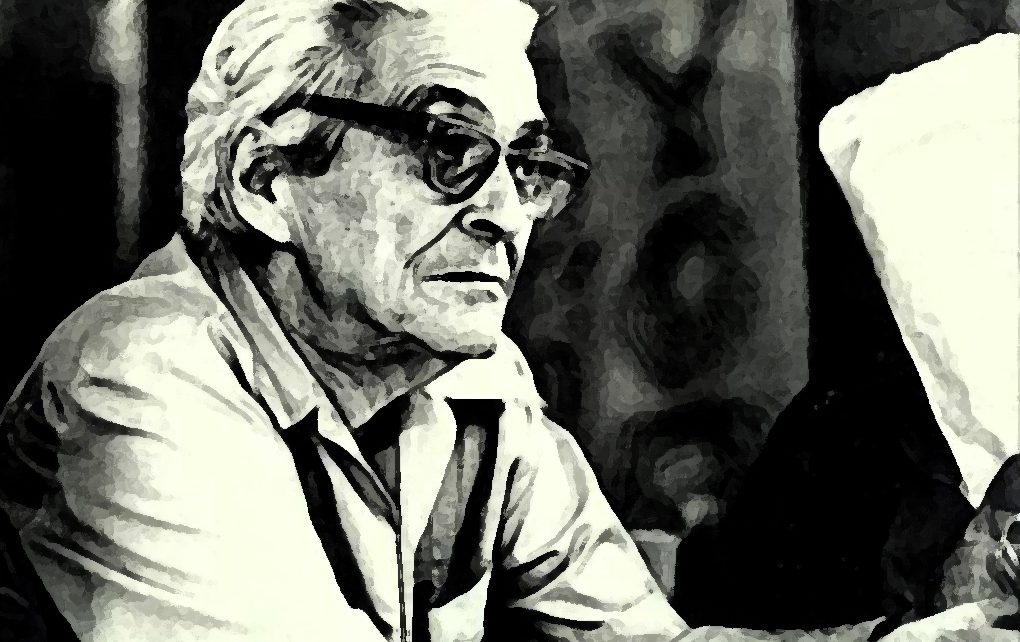
On October 19, 1990, Havana lost one of its most versatile and hard-to-classify intellectuals. Poet, fiction writer, essayist, journalist, translator, literary critic, playwright, and radio and television scriptwriter, Félix Pita Rodríguez defies any attempt to fit him into a simple category. As researcher Juan Nicolás Padrón observed, Rodríguez “(…) comes across as an odd figure, standing apart from established classifications or proving difficult to study as either a poet or a fiction writer, elusive when it comes to categorization.” Thirty-five years after his death, that sense of being an “odd figure” has only been reinforced, revealing an originality that time has failed to tame.
Pita Rodríguez’s education followed the path of the consummate autodidact. Born into a family of Galician immigrants, he received little formal schooling, but his curiosity knew no bounds. At around sixteen, he recalled in an interview, he began writing and looking for ways to publish his work. He sent some prose poems to Alejo Carpentier, then editor-in-chief of the magazine Carteles, and that gesture marked the beginning of a friendship that would last for decades. “When Alejo published my prose poems, that was the endorsement I needed: I began writing more regularly and with greater interest,” he recalled years later. By 1925, he had met Nicolás Guillén, and the three men—Carpentier, Guillén, and Pita—developed a friendship that became one of the cornerstones of Cuba’s literary avant-garde.
His poetry belongs to the Cuban avant-garde movement and bears a strong Surrealist influence that sets it apart within the national literary landscape. Roberto Fernández Retamar described him as “perhaps the only Cuban we can identify as a representative of that movement,” noting that his poetry “reflects the absence of fixed rules in its expression.” Pita Rodríguez himself acknowledged the influence of the Surrealist masters he met in Paris: “They taught me to liberate language, to use it in a profound, hidden sense, to reach what lies beneath.” Corcel de fuego, published in 1948, marked the culmination of his early period and established his distinctive approach to poetic language. His final poetry collection, Las noches, appeared in 1979 and explored portraits of figures whom time had rendered memorable. Critic Raimundo Lazo wrote of his fiction: “Félix was one of the most vigorous and distinctive short-story writers of his time, distinguished by the clarity, objectivity, vividness, and strength of his storytelling.”
From an early age, his byline appeared in magazines such as Avance, Social, and Atuei, as well as in the newspaper Noticias de Hoy and the literary supplement of the Diario de la Marina. In 1940, after returning from his travels in Europe, he took over as editor of the Sunday magazine published by Noticias de Hoy, the official newspaper of the Popular Socialist Party. In 1943, the Association of Cuba’s Radio and Print Journalists named him the country’s best dramatist, and in 1946 he won the prestigious international Hernández Catá Award for his short story Cosme y Damián. His work as a radio and television scriptwriter took him to Buenos Aires in 1949 and to Caracas between 1958 and 1959. Nicolás Guillén summed up his prose in a phrase that became a defining description of his writing: it possessed “storytelling and poetry.”
Pita Rodríguez’s political commitment was as intense as his literary vocation. In 1937, he was part of the Cuban delegation to the Second International Congress of Writers for the Defense of Culture, held in Valencia, Madrid, and Barcelona, alongside Juan Marinello, Alejo Carpentier, and Nicolás Guillén. During the Spanish Civil War, he helped many Cuban combatants and was one of the founders of the Ibero-American Committee for the Defense of the Spanish Republic. Years later, his solidarity extended to the cause of Vietnam, about which he wrote widely read reports and the books Vietnam: notas de un diario and Niños de Vietnam.
Following the triumph of the Revolution in 1959, he returned to Cuba and immediately joined the process of social transformation. He served as vice president of the Union of Writers and Artists of Cuba and as president of its Literature Section, positions from which he played a decisive role in promoting emerging talent. In 1985, in recognition of his entire body of work, he received the National Literature Award. The following year, he won the Critics’ Award for his book De sueños y memorias. He was also awarded the Félix Varela Order and the Distinction for National Culture. He celebrated his eightieth birthday in Bejucal, already blind, at an event where he recited a poem that can be regarded as his literary testament:
“I would not want to die
when the backpack of my life
has already been emptied…
For I want to die
with death fighting for its life
against mine.”
Literary critics have been unanimous in recognizing his intellectual stature. Researcher and professor Salvador Bueno Menéndez considered him one of the few outstanding examples of Cuban avant-garde literature, alongside Manuel Navarro Luna. When writing about Pita Rodríguez as he entered his eighties, Hortensia Pichardo stated emphatically that “we do not flatter Pita Rodríguez by calling him a fully established classic of contemporary Cuban literature. I would go even further.” Regino Pedroso added a personal note: “(…) throughout the brilliant output of this great wordsmith, the experience of his fruitful and adventurous life is always in bloom.”
Those who knew him personally share a portrait of a complex yet endearing man. He enjoyed Cuban wit and mischief, could be irreverent and outspoken, and sometimes made enemies through his candor. Writer Emilio Comas Paret, poet Omar Felipe Mauri, and critic Waldo González, who had known him since their youth, explored both his personal qualities and the social commitments that set him apart. As Fernández Retamar observed, Pita Rodríguez’s poetry always moved between two strands: “(…) the poetry of militancy, seeking to improve humanity collectively, and, at the same time, lyrical, introspective poetry that explores the individual, the deeply personal.”
Thirty-six years after his death, Félix Pita Rodríguez continues to challenge readers who explore twentieth-century Cuban literature. He was, as he described himself, a “perennial adolescent” who never ceased to marvel at the world and turned that sense of wonder into literary material. His life was a double adventure: the adventure of living and that of writing. In both, he left a mark that time has not erased.
Translated by Luis E. Amador Dominguez
Photo: La Jiribilla