Where New Generations Emerge: 40 Years of the AHS
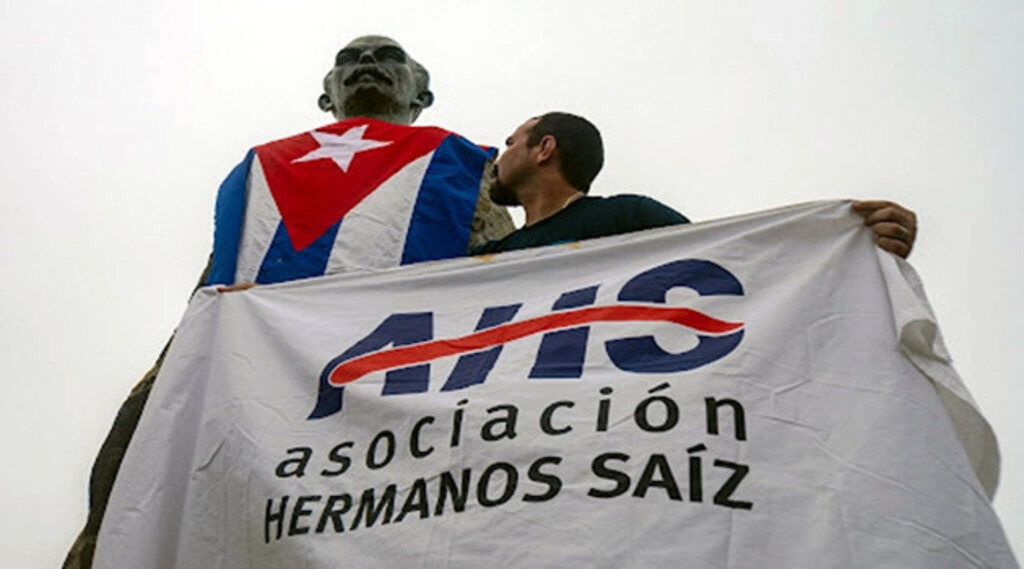
On October 18, the Hermanos Saíz Association (Asociación Hermanos Saíz, AHS) marked its 40th anniversary. More than an occasion for celebration, the milestone offers an opportunity to reflect on one of the pillars that have historically sustained Cuba’s cultural life: the ability to renew itself without abandoning its roots.
Speaking of the AHS means recognizing one of the strongest expressions of the commitment to ensuring continuity in the country’s artistic and intellectual life. It also means looking back at a relationship forged over decades with the Union of Writers and Artists of Cuba (Unión de Escritores y Artistas de Cuba, Uneac), an institution that has supported generations of young creators and helped nurture many of the country’s leading cultural figures.
The connection between the two organizations goes beyond a simple generational handover. It is a living bond that brings together experience and youth, tradition and innovation, memory and contemporary expression. Through this ongoing exchange, the foundations of a culture that looks to each new generation of artists to carry it forward have grown stronger.
Since its founding on October 18, 1986, the AHS has been committed to defending and promoting the work of young creators, guided by a vision rooted in the cultural and human values of Cuban society. Over the past four decades, its ranks have included writers, musicians, visual artists, researchers, audiovisual producers and cultural promoters who have gone on to assume important roles within the Uneac and other institutions across the country’s cultural sector.
This track record has made the organization, which honors the memory of Sergio Enrique and Luis Rodolfo Saíz Montes de Oca, an indispensable space for the development of Cuban national culture. Far more than a stepping stone for emerging generations, the AHS has established itself as a platform for artistic creation, experimentation and dialogue, where cultural traditions coexist with a wide range of aesthetic explorations and the challenges of each era find responses through art.
As national president Yasel Toledo Garnache has recalled, the Uneac’s gardens hosted numerous early gatherings between established cultural figures and young people just beginning to make their mark in the arts. Those encounters helped forge a relationship of profound mutual enrichment that remains strong to this day.
“The Uneac is a home for art and dreams. It brings together many of the recipients of the Masters of Youth distinction and other creators who serve as role models for younger generations, as well as young writers and artists. I am also proud to be a member, because the AHS recognizes the Uneac as part of its own origins.”
In Cuba, where cultural policy has been closely linked to ideals of social justice and human development, art has maintained a strong public vocation. This vision is another point of convergence between the AHS and the Uneac, as both organizations champion an understanding of artistic creation that is closely connected to community life, processes of social transformation and the spiritual enrichment of the nation.
From this perspective, they uphold a tradition of intellectual and cultural engagement that places art at the heart of the country’s most pressing debates.
Forty years after its founding, the Hermanos Saíz Association thus reaffirms its place as an indispensable part of Cuban culture, an organization in which young people represent not merely the future but an active, committed presence in the present.
As writer and journalist Yasel Toledo Garnache said during the main anniversary ceremony, held this Saturday at the José Martí Memorial, the AHS is an artistic vanguard made up of young people with a deep passion for art and for Cuba.
Translated by Luis E. Amador Dominguez