María Teresa Vera: The Naked Soul of Cuban Trova
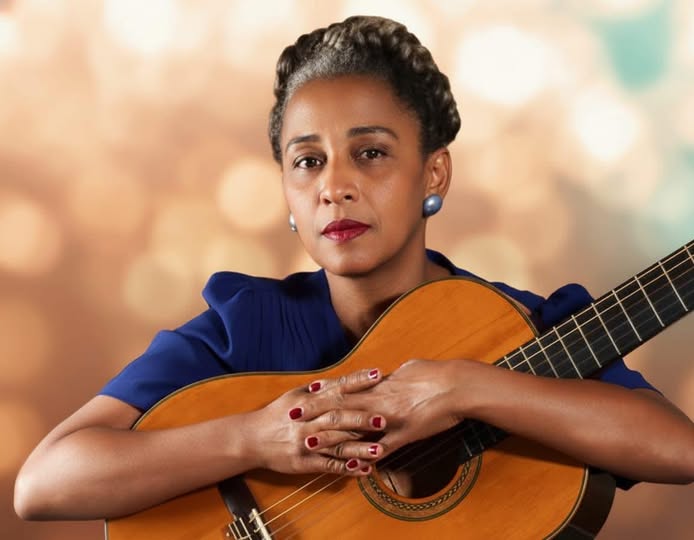
A name that evokes nostalgia and rhythmic lyricism in Havana’s cultural memory. Her voice, notably devoid of vibrato, produced tones that were direct, sustained only long enough to move with singular elegance into the next phrase. For those who never encountered her in person, her legacy endures precisely in that quality: a persistent resonance, a song that emerges spontaneously at gatherings, a standard in the repertoire approached with reverence by Cuban musicians. María Teresa Vera, widely regarded as the matriarch of Cuban trova, forged her reputation not through conventional celebrity but through uncompromising artistic authenticity, challenging the aesthetic and social conventions of her era simply through her presence.
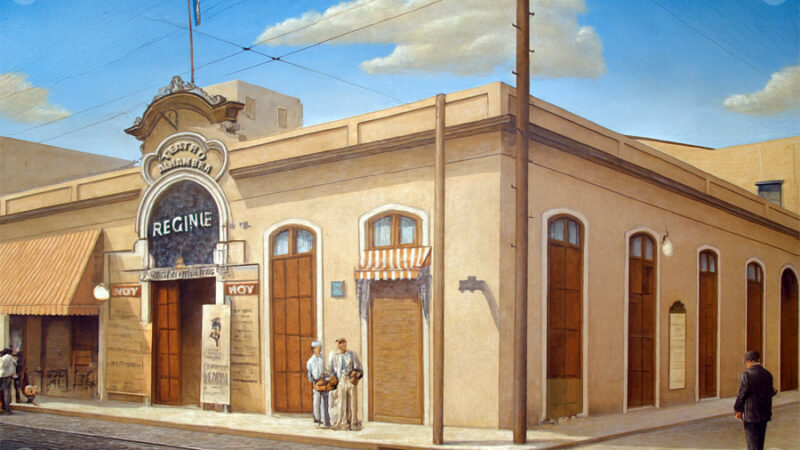
She was born in 1895 in Guanajay, the granddaughter of enslaved people and the daughter of a Spanish military officer who departed before her birth. She was raised in modest circumstances while her mother worked as a domestic servant. Yet within a household that contained books and a piano, music established an early foothold. Havana’s bohemian milieu welcomed her at a young age, and there she encountered the influential trova musician Manuel Corona, who encouraged her to study guitar and became her mentor, transmitting his repertoire and compositional approach. At sixteen, she debuted at the Teatro Politeama Grande, performing Corona’s song “Mercedes.” The reception was so enthusiastic that she was required to repeat the piece six times, effectively determining her artistic path from that moment forward.
Vera’s career unfolded within a musical culture largely dominated by men. To be a woman, Black, and a professional artist in early twentieth‑century Cuba entailed confronting a triple barrier of race, gender, and profession. Her distinction lies in the fact that she never sought authorization to occupy artistic space; she claimed it through talent, discipline, and resolve.
Her first major professional milestone was the duo she formed with Rafael Zequeira (1916–1924), with whom she undertook tours and made historically significant recordings. Contracted by RCA Victor, they traveled repeatedly to New York and produced nearly two hundred recordings that contributed substantially to the international dissemination of Cuban music. Following Zequeira’s death, she embarked on an even more audacious initiative. In 1926, at the height of the popularity of son, she founded and directed Sexteto Occidente, becoming the first woman known to lead a son ensemble in Cuba. Contemporary accounts emphasize the natural authority with which she exercised this leadership, often described as smiling, poised, and carrying her guitar as though it were an extension of her body. The ensemble included figures such as Ignacio Piñeiro and played a decisive role in shaping Havana‑style son.
Her transgressive disposition extended beyond performance practice. As a practitioner of Afro‑Cuban religious traditions, she performed and recorded ñáñigo claves employing Abakuá ritual language, a domain historically restricted to men. According to several sources, this act resulted in a religious prohibition that compelled her withdrawal from public performance for nearly a decade—a silence interrupted only by economic necessity and her enduring commitment to music.
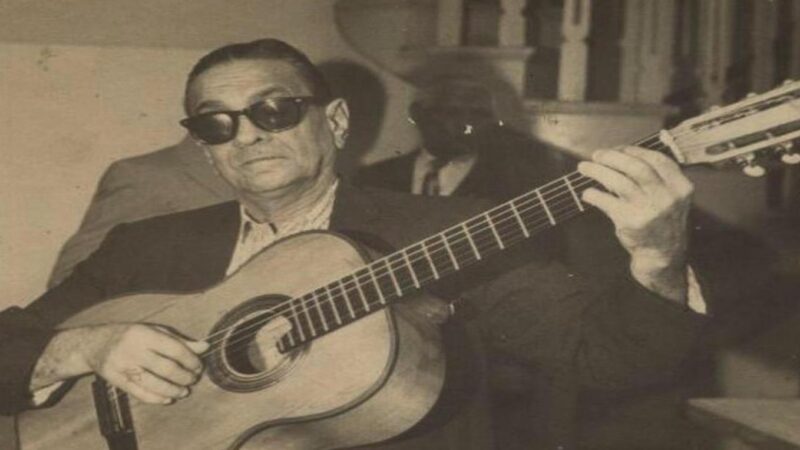
Her return to the stage in 1935 inaugurated what is generally considered the most emblematic phase of her career. She formed a duo with guitarist Lorenzo Hierrezuelo that lasted twenty‑seven years and is regarded as one of the most productive partnerships in Cuban musical history. During this period, she collaborated with her childhood friend Guillermina Aramburu to create what would become her most internationally recognized composition, Veinte años.
The genesis of this song reflects the emotional realism characteristic of her repertoire. Aramburu, abandoned by her husband after two decades of marriage, wrote verses expressing personal sorrow. Vera set these lyrics to music in the form of a habanera marked by restrained yet profound melancholy. The composition achieved the status of a timeless standard, later interpreted by artists worldwide, from Omara Portuondo in the Buena Vista Social Club project to widely circulated performances by young musicians on digital platforms decades later.
Listeners and critics consistently described Vera’s vocal production as direct, unembellished, and apparently effortless, yet rich in expressive nuance. She habitually introduced subtle melodic variants, demonstrating interpretive creativity within established forms. Her repertoire encompassed trova, son, bolero, guaracha, and rumba, and her documented songbook approaches nine hundred titles. Despite her renown, and in marked contrast to prevailing diva archetypes, she is remembered as an artist who consistently privileged expressive integrity over aesthetic fashion or commercial pressure.
María Teresa Vera died on December 17, 1965; however, her artistic output has never ceased to circulate. Her legacy functions as a living archive that is continually rediscovered and reinterpreted. Veinte años represents only a fraction of her contribution, while her broader repertoire remains a vital source for new generations of performers. Musicologist María Teresa Linares characterized her duo with Hierrezuelo as “the most sublime expression of Cuban song.”
In contemporary scholarship, she is examined not solely as a performer but as a figure emblematic of cultural resilience and aesthetic defiance. Researchers such as Jaime Masó Torres have worked to correct inaccuracies in her biographical record and to contextualize her production within the intersecting constraints of race and gender. Similarly, documentary initiatives such as the 680‑page illustrated songbook prepared by artist Miriam Páez Bolet, containing 117 notated songs, attest to the sustained commitment to preserving and disseminating her complete oeuvre. Initiated in 2009, this compilation constitutes an important archival resource that supports the historically informed performance of her music.
The essence of her significance resides, as poet Mabel Cuesta has observed, in the necessity of understanding her as a phenomenon that resists conventional categorization. She did not conform to the social or artistic expectations imposed upon women of her period: she directed ensembles, composed extensively, performed with calm authority, and declined to transform her gift into a purely commercial commodity. She embodied, as she herself remarked of the bolero, the conviction that a song is not merely sung but suffered.
As Manuel Corona once wrote, María Teresa Vera is a relic—though not a lifeless one—worthy of reverence. She remains an enduring fragment of the Cuban soul, and her voice, far from fading, continues to resonate among those who seek the island’s musical tradition’s deepest roots.
Translated by Luis E. Amador Dominguez
Photo taken from a post by Francisco Valiente on Facebook