Pablo de la Torriente Brau: A Whirlwind Life Between Reporting and the Trenches
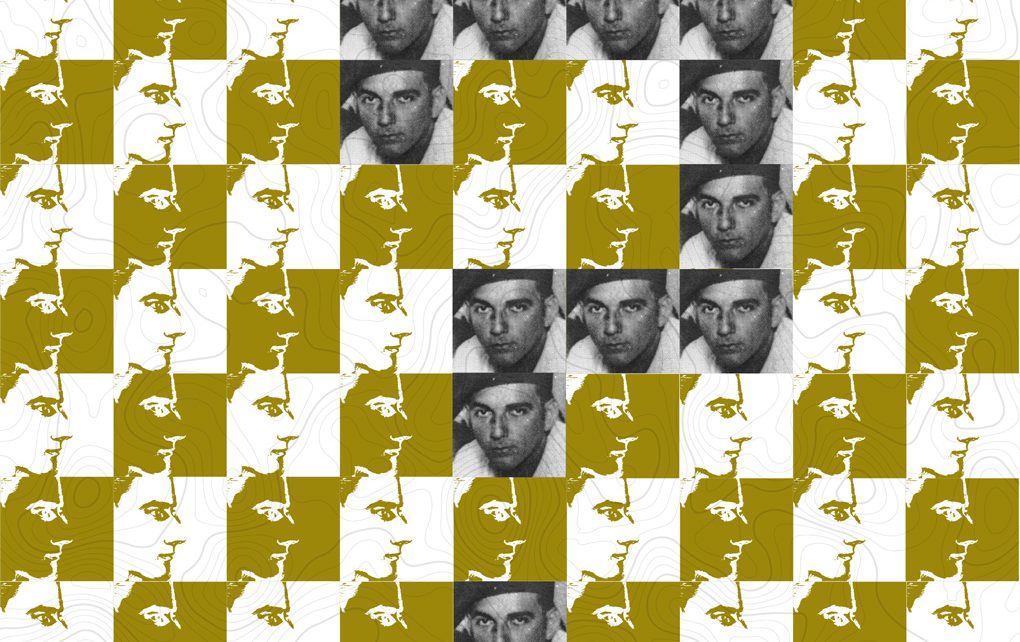
Born in San Juan, Puerto Rico, on December 12, 1901, and raised in Cuba from a young age, Pablo de la Torriente Brau was much more than a journalist: he was an insurgent witness, a political prisoner, an exile, and ultimately an internationalist combatant, whose work and death made him a symbol of intellectual fervor and political commitment during a tumultuous era.
His trajectory cannot be separated from the turbulent Cuban context of the first half of the 20th century. From an early age, his writing and activism intertwined in the struggle against the dictatorship of Gerardo Machado. In the 1920s, while working for various magazines, his political awareness matured rapidly, and he joined the Directorio Estudiantil Universitario, a key organization in the opposition to Machado.
He was arrested in 1931 and confined to the infamous Presidio Modelo on Isla de Pinos. This experience marked a turning point. There he wrote the series of articles 105 días preso and later the book Presidio Modelo, also known as La isla de los 500 asesinatos, a devastating testimony exposing the prison conditions, considered by scholars a foundational milestone of testimonial journalism in Cuba.
After his release and exile in New York, he returned to Cuba to practice deeply committed journalism. His series Realengo 18, published in the newspaper Ahora, is a paradigmatic example. There, he exposed exploitation and abuses against peasants using vigorous prose and direct language, underpinned by rigorous social investigation. Critic Jesús Cano Reyes noted that his journalistic narrative represented a turning point as a narrative form.
In 1936, the outbreak of the Spanish Civil War drew intellectuals from around the world. For him, then, in his second exile in New York, it was an irresistible call. In a letter, he articulated his decision eloquently: “I am going to Spain, to be carried by the great river of the revolution. To see a people in struggle. To meet heroes.”

He managed to board as a correspondent for the New York magazine New Masses and the Mexican publication El Machete. He arrived in war-torn Spain in September 1936, with the declared goal of not only reporting but also learning from the process of the struggle in Cuba.
In a very short time, his role took a radical turn. The observer became an active participant in history. In November 1936, he temporarily left his correspondent duties to assume the position of political commissar. As researcher Jorge Ferrer noted: “The correspondent who was going to report on the war has himself become part of the war.”
This whirlwind immersion had a tragic outcome. On December 19, 1936, just a week after turning 35, Pablo de la Torriente Brau fell in combat at Majadahonda, defending Madrid. His premature death, with weapons in hand, immediately elevated him to the status of martyr and legend. Poet Miguel Hernández, whom he met at the front, dedicated a moving elegy: Pablo de la Torriente, / you have remained in Spain / and fallen in my soul.
His relevance resides in the power of his writing and the coherence of his life. Cano Reyes highlighted that, from his death, a constellation of chronicles, elegies, poems, and all sorts of diverse texts emerged, feeding his legend. Meanwhile, analyses published in journals such as Pensamiento Crítico as early as 1968 vindicated him as a key figure for understanding militant journalism and the connection between anti-imperialist struggles.
Pablo de la Torriente Brau embodied the conviction that words are a weapon charged with the future, yet sometimes the future demands wielding other arms. His whirlwind existence, suspended between reporting and the trenches, between Cuba and Spain, between denunciation and sacrifice, challenges us to consider the role of the intellectual in the conflicts of his time. Almost nine decades after his death, his vibrant prose and example of extreme coherence continue to offer, as he himself sought to learn in Spain, countless lessons.
Translated by Luis E. Amador Dominguez
Photo: Cubaperiodista