Music Festival Champions Cuban Heritage
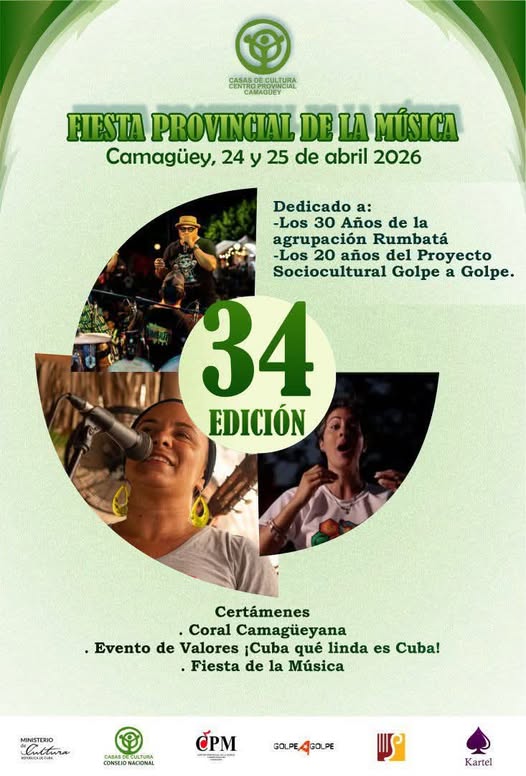
Camagüey’s Fiesta de la Música is reaffirming its commitment to safeguarding Cuba’s cultural heritage, popular identity, and the amateur artists’ movement, with activities scheduled for April 24 and 25.
The cultural gathering brings together, under a single program, events that were previously held separately. The decision was made in response to current circumstances, consolidating what is now known as Fiesta de la Música, said Arbelio Marín, a specialist at the Provincial Center of Music, who underscored the comprehensive evaluation of artistic talent across the province.
Representing the network of Houses of Culture, Anisley Martínez stressed that music is one of the defining expressions of Camagüey’s cultural identity and part of an ongoing effort to preserve the essence of the popular roots and traditions that distinguish the Cuban nation.
In that context, Maribel Enamorado, one of the event’s organizers, highlighted the strengthening of choral work, with an emphasis on children and adults, as well as the essential role of arts instructors in shaping individuals through quality arts education.
As part of the lead-up to the festival, the Estrechando Espacios gathering will be held on April 23, featuring student performers from the José White Conservatory of Music in an exchange designed to promote the pedagogical continuity of the arts in the province.
The program includes 75 artistic units, of which 55 were selected and 28 advanced as finalists, spanning choirs, soloists, trios, and small-format ensembles, all of which will compete during the central gala on April 24.
The Artistic Gala will take place at the historic Plaza de los Trabajadores, a venue that will host concerts, workshops, and exchanges among creators, arts education institutions, and sociocultural projects from across the province.
The event will also pay tribute to important anniversaries, including the 30th anniversary of the group Rumbatá and the 20th anniversary of the Golpe a Golpe project, both recognized as benchmarks of musical and community work in Camagüey.
Camagüey’s Department of Culture also highlighted the value of the event’s restructuring, which includes expanded digital outreach and the active participation of the amateur artists’ movement, even amid current constraints, while maintaining a strong cultural commitment.
Finally, cultural authorities in municipalities including Florida, Minas, Céspedes, and Sibanicú agreed that Fiesta de la Música reinforces the protection of Cuba’s intangible heritage, consolidating culture as a core pillar of identity, social cohesion, and community development.
Translated by Luis E. Amador Dominguez