Enrique Collazo: The Lucidity of the Rifle and the Pen
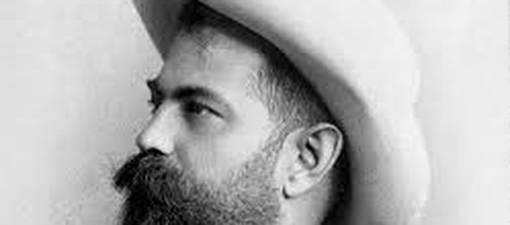
There are men whose lives read like maps of unwavering loyalty to an idea. Enrique Collazo Tejada, born in Santiago de Cuba on May 28, 1848, belonged to that lineage. His life, shaped by Cuba’s two great wars of independence and the bitter experience of U.S. intervention, was marked by remarkable consistency. A military officer trained in the academies of the enemy, he became one of the first critical historians of that very system, a man who, in the words of historian Gustavo Placer Cervera, knew how to expose the stratagems of colonialism and the snares of a rising empire with both rifle and intellect. On the anniversary of his birth, it is worth asking whether this general’s greatest achievement was his early understanding that a nation is defended as much on the battlefield as on the written page.
Collazo’s military training contains a defining paradox that shaped his future. Taken to Spain at the age of nine by his uncle and godfather, he entered the prestigious artillery school in Segovia in July 1862 and graduated in August 1866 with the rank of second lieutenant. By 1868, he was already a lieutenant in the Spanish Army, seemingly destined for a comfortable career in the metropolis. Yet the outbreak of the Grito de Yara that same year transformed his loyalties. Unlike other Cuban-born officers who remained loyal to the Crown, Collazo answered the patriotic call and fled to New York to join a liberation expedition, entering the Ten Years’ War not as a ranking officer, but as an ordinary soldier. That voluntary renunciation of status reveals the essence of the man: someone who placed homeland and belonging above the logic of personal convenience.
His service record in the mambí struggle was impeccable. He fought under Generals Máximo Gómez and Antonio Maceo, earning distinction until he reached the rank of commander at the end of the war in 1878. He was among the few who voted against the Pact of Zanjón, convinced that the truce amounted to a postponed defeat. That commitment to full independence kept him active in the conspiracy until, in New York, alongside José Martí, he signed the order to rise up that would launch the Necessary War in 1895. After landing once again in Cuba in 1896, he was promoted to brigadier general in the Liberation Army. Collazo was no desk-bound strategist; he carried his rifle through Camagüey and eastern Cuba, and he knew firsthand the taste of defeat and the exhaustion of exile.
Yet his true distinction lies in the transformation that followed the signing of the Treaty of Paris and the subsequent U.S. military occupation. While many independence heroes were dazzled or co-opted by the new power, Collazo remained wary. His pen then became sharper than his sword. He was the first in Cuba to turn systematically to history as a tool for denouncing and resisting U.S. imperialism. Far removed from the flattering portrayals of the paternal northern neighbor circulating at the time, Collazo published Cuba Independiente in 1900, followed by Los Americanos en Cuba in 1905 and Cuba Intervenida in 1910, an unsettling trilogy that exposed a logic of domination masked by the false appearance of military assistance.
Contemporary scholars regard Collazo as a forerunner of Cuban revisionist historiography. Cuba Heroica, published in 1912, not only recounts the feats of the mambises, but also uses them as a mirror to shame a republic that, in his view, betrayed those sacrifices by accepting the Platt Amendment. Researcher Maribel Duarte González of the José Martí National Library has noted that Collazo was “the first to appeal to history in the fight against imperialism,” a methodological lesson that remains strikingly relevant in today’s debates over cultural sovereignty in the 21st century. He understood that intervention was not only a military event, but also a cultural and economic phenomenon that had to be dismantled with evidence and argument, a task he also pursued as director of the newspaper La Nación.
Collazo died in Marianao, Havana, on March 13, 1921, at the age of 72, without seeing his struggle for a fully sovereign island fulfilled. His legacy, however, extends far beyond the battlefield. A founder of the Cuban Academy of History, he left behind posthumous works such as La Guerra en Cuba (1926) and a body of essays of remarkable insight. In a world where memory is often the first territory to be colonized, Enrique Collazo’s legacy reminds us of the need for unsettling witnesses: those who, having once wielded the sword, did not hesitate to write the truths the sword could not cut through.
Translated by Luis E. Amador Dominguez