The Quiet Legacy of Alberto Villalón
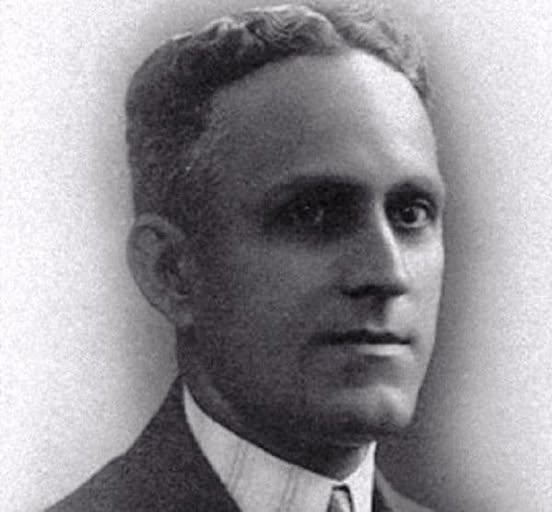
To speak of Alberto Villalón is to speak of the very genesis of Cuban song. Born on June 7, 1882, his life spanned the twilight of the colonial era, the birth of the Republic, and the turbulent decades of the first half of the twentieth century. Yet beyond the dates, his legend rests on a singular distinction: he was one of the few direct disciples of José “Pepe” Sánchez, the tailor from Santiago de Cuba who created the bolero. From that master, Villalón learned not only the secrets of guitar playing and composition, but also the spirit of a gentlemanly bohemianism that never left him.
Musicologist Odilio Urfé often emphasized Villalón’s refinement. In one of his essays for the magazine Pro Arte Musical, Urfé observed that Villalón’s work represents the transition from the vigorous strumming of the country music tradition to the melodic delicacy of troubadour fingerpicking: “He was not merely a singer of sones; he was a stylist who bestowed salon-like dignity upon the trova without stripping it of its street-born essence.” Indeed, he belonged to that lineage of musicians who never needed to raise their voices to be heard. His guitar, with its impeccable tuning and harmonic sensibility well ahead of its time, spoke a language of understated elegance.
His celebrated disciple, the unforgettable Sindo Garay, with whom he shared a fraternal friendship and a healthy artistic rivalry, remarked in an interview published in Carteles magazine in 1948: “Alberto was a true dockworker at heart, but whenever he slung a guitar over his shoulder, he seemed like a marquis. I enjoyed the challenge of seeing who could improvise the most décimas, but Alberto preferred fine embroidery, the perfectly placed note. He taught me that silence sometimes sings more eloquently than a verse.” That expressive restraint, that mastery of the space between one chord and the next, constitutes his most enduring legacy.
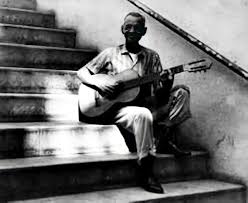 Villalón did not leave behind a vast body of work; his catalog is relatively small, yet remarkably solid—so much so as to approach perfection. One need only mention “Yo reiré cuando tú llores” (“I Will Laugh When You Cry”) to appreciate his ability to blend melodrama and irony in a song that would later be transformed into a classic of Cuban popular music by the Trío Matamoros. Researcher Helio Orovio, in his indispensable Diccionario de la Música Cubana, highlights this very quality: “Villalón was not a professional songwriter in the commercial sense. He wrote out of a spiritual necessity. In pieces such as ‘Consuelo,’ he achieved a synthesis of the habanera and the bolero that only a refined ear, shaped by the finest traditions of the nineteenth century, could accomplish.”
Perhaps one of the most remarkable chapters of his life is the one that places him among the pioneers of the trio format. In the passageway on Empedrado Street, where trova musicians gathered beneath the corner lamppost, Villalón envisioned a richer texture than the simple guitar-and-voice duo. Specialized critics credit him with the idea of organizing voices into a fabric of lead, second voice, and falsetto, thereby creating a sound that would come to define Cuban music for decades. Musician and musicologist María Teresa Linares, in her studies of Cuban punto and trova traditions, noted that the trio format that now seems so natural to us was once a timbral revolution, one owed to the experimental curiosity of figures such as Villalón, who transformed the courtyard gathering into an intimate concert experience.
Despite his talent, Alberto never sought widespread fame. He preferred the warmth of a circle of friends, rooftop gatherings in Havana, and the patient work of teaching. The master carried within his memory a vast treasury of old melodies and accumulated wisdom that has now largely faded away. According to journalist and music critic Joaquín Borges, who visited him during his final years on San Lázaro Street: “Alberto was a living archive. Watching him tune a guitar was like witnessing a sacred ritual. He spoke to the strings before touching them. With him dies the purest accent of the nineteenth-century troubadour.”
Those who knew him describe a reserved, perhaps melancholic man, yet one of exquisite kindness. During serenades, when his voice no longer responded with the agility of earlier years, his fingers compensated for any physical decline through wiser and more measured technique. That serenity in the face of time’s passage was reflected in his music: it never sounded old-fashioned, only proudly classical.
Translated by Luis E. Amador Dominguez
Photo: Cubarte