Second International Political Humor Biennial Set to Open in Havana
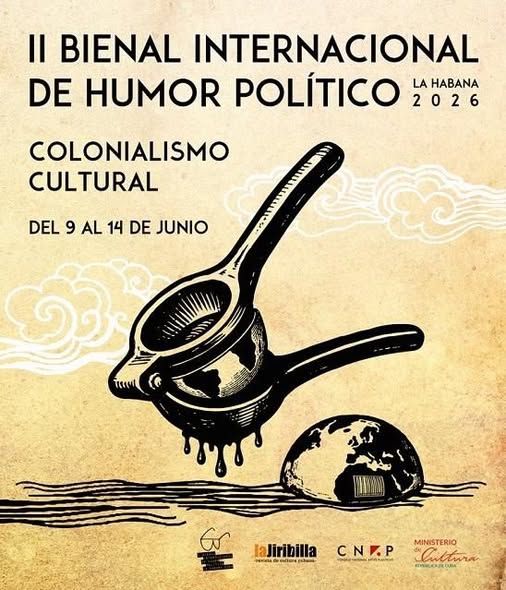
Havana will host the Second International Political Humor Biennial from June 9 to 14, bringing together 118 artists from 38 countries for a program of exhibitions, panel discussions, community initiatives, and professional exchange activities.
The central exhibition will open on Tuesday, June 9, at 11:00 a.m. at Galería 23 y 12, showcasing 61 works selected from 359 submissions received from across the five continents, highlighting the event’s international scope and diversity.
The international jury, chaired by Cuban artist Adán Iglesias Toledo, includes prominent figures in graphic satire and political cartooning such as Mexican cartoonist Víctor Vélez “Chubasco,” Belgian artist Luc Descheemaeker, American cartoonist Liza Donnelly, and Cuban artist Ismael Lema. Together, they bring a wide-ranging perspective to the current state of political humor worldwide.
This year’s biennial focuses on globalization, cultural colonialism, and the influence of dominant cultural industries—themes that will be explored through both the exhibition and a series of accompanying discussions.
Events will take place at venues throughout the capital. The Unión de Periodistas de Cuba will host a solo exhibition by Pedro Méndez Suárez, while the Museo del Humor de San Antonio de los Baños will present exhibitions examining cultural colonization and the legacy of Fidel Castro Ruz. The weekly publication Palante will also mark its 65th anniversary with a special program of activities.
The Pabellón Cuba will host children’s workshops and a forum dedicated to young artists and political humor, while Parque Mariana Grajales will feature participatory events, graphic interventions, and community-based activities.
The biennial will close on Sunday, June 14, at the Centro Experimental de Artes Visuales José Antonio Díaz Peláez, with invited artists and members of the organizing committee in attendance.
The event underscores the enduring role of political humor as a vehicle for critical reflection, cultural dialogue, and creative engagement across borders.
Source: Cuban Ministry of Culture
Translated by Luis E. Amador Dominguez