Jazz Plaza 2026: A Celebration of Color and Sound
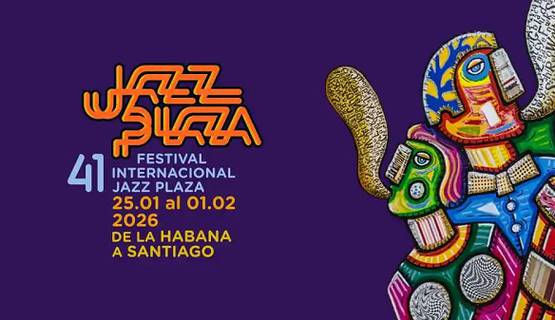
From January 25 to February 1, 2026, the Cuban capital will pulsate with the rhythm of jazz during the 41st edition of the International Jazz Plaza Festival. This premier Cuban musical event promises to exceed expectations with a lineup that blends international stars with local talent and an expanded reach, extending to new provinces for the first time.
The official poster for the festival is an exclusive creation by Alfredo Sosabravo, National Plastic Arts Prize winner and a living legend of Cuban culture, who recently celebrated his 95th birthday. The image draws direct inspiration from one of his works (El Guateque). Organizers commissioned this specific piece to capture the joy and festive energy of Jazz Plaza, and the design showcases an explosion of color that encapsulates the festival’s history and Cuba’s plural identity. It fuses nostalgia and modernity, reflecting the spirit of an edition seeking to be a jazz celebration with deep Cuban roots.
The event will kick off with a special concert featuring the renowned maestro Frank Fernández, who will share the stage with students from the country’s art schools. This gesture underscores one of the edition’s central themes: the prominence of new generations.
Confirmed performers include world-class figures such as Cuban-American pianist and Grammy winner Nachito Herrera, who will perform with the National Symphony Orchestra of Cuba. Roberto Fonseca, the festival’s artistic director, will also headline the closing concert.
The event’s tributes include a celebration of Conjunto Arsenio Rodríguez, a cornerstone of Cuban popular music, the 50th-anniversary commemoration of the Latin Grammy-winning group Síntesis, and a concert reuniting Cuban winners of the Montreux Jazz Festival, such as Marialy Pacheco, Harold López-Nussa, and Yilian Cañizares.
The programming will also encompass genres beyond traditional jazz, with spaces dedicated to son, rumba, and contemporary fusions, showcasing the island’s musical diversity.
A major innovation for 2026 is the geographic expansion. Traditionally concentrated in Havana, the festival will extend to the eastern provinces of Holguín, Santiago de Cuba, and Santa Clara. Organizers emphasize that bringing the event to Holguín, a region recently affected by a hurricane, represents an act of resilience and a commitment to the decentralization of culture.
Beyond the concerts, the festival is conceived as a multidisciplinary platform and will include workshops, encounters between established and emerging musicians, and visual arts, photography, and film presentations, according to representatives of the Cuban Institute of Music.
With a program that pays homage to its history while embracing the future, and with an expansion that brings its music to new audiences, Jazz Plaza 2026 is poised to reaffirm Cuba as an indispensable destination on the world jazz map.
Translated by Luis E. Amador Dominguez