María Luisa Milanés: The Echo of a Voice That Refused to Be Silenced
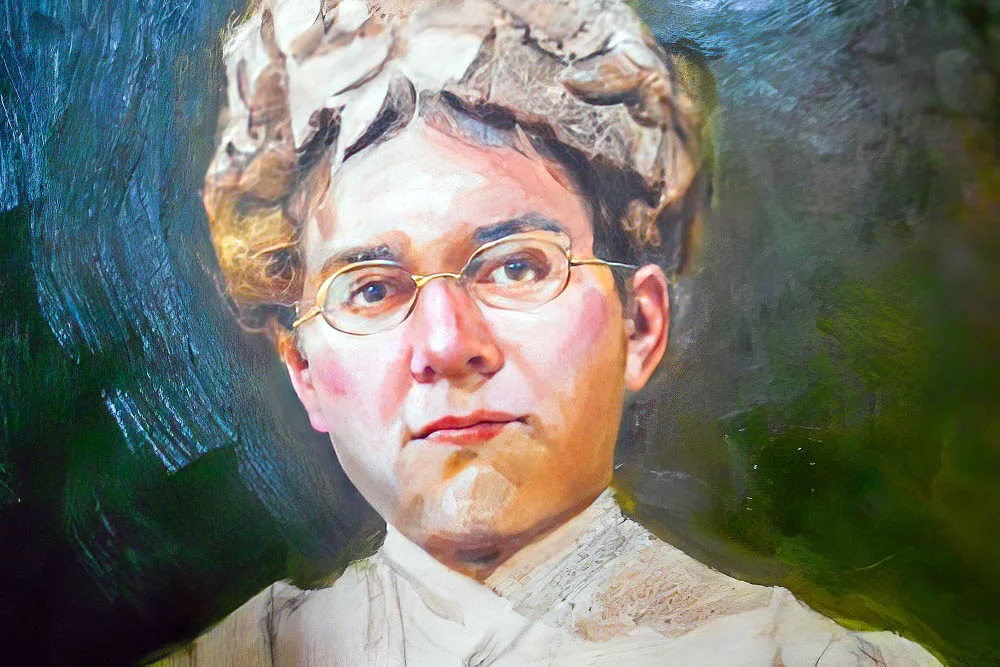
On October 12, 1919, the city of Santiago de Cuba received the news that many had feared. Three days earlier, at her home in Bayamo, María Luisa Milanés had shot herself in the chest. She was 26 years old. Her death was not an isolated event; it was the tragic outcome of a life marked by the contradiction between exceptional intelligence and a social environment that did not know, or did not wish, to make room for her. Researcher Leonardo Depestre expressed it clearly: “If anyone has been treated unjustly by memory, it is this poet, born inland in eastern Cuba and deceased (…), by her own hand, after three days of agony.”
María Luisa Enriqueta del Carmen Milanés was born on July 15, 1893, at the Hato Abajo estate in Cauto Cristo, Jiguaní, although other researchers identify the El Palmarito estate, now part of the municipality of Cauto Cristo, as her birthplace. She was the daughter of teacher María de la Luz García Lorente and Mambi general Luis A. Milanés Tamayo, a man of strict morals and patriarchal values who profoundly shaped his daughter’s life. The family moved to Bayamo in 1895, after her father joined the War of Independence, and later settled in Manzanillo.
Her education followed the model expected of a woman from a well-to-do family at the time. She completed her primary studies at Doña Margarita Yero School in Manzanillo and her secondary education at Juan Bautista Sagarra School in Santiago de Cuba. She studied history, philosophy, oratory, classical poetry, French, English, and Latin, as well as music, painting, and handicrafts. This broad education enabled her to develop a literary sensibility that soon found its natural outlet in poetry. She began writing as an adolescent, and her most productive creative period extended from 1912 to 1919.
Under the pen name Liana de Lux, María Luisa published several of her poems and translated English and French poets. The Manzanillo magazine Orto was one of the publications that welcomed her work. Her poetry belongs to the postmodernist tradition, and the idea of death constitutes the central, almost exclusive theme of her work, although she also wrote about nostalgia for childhood and patriotic feeling. Researcher Ivelsis Peña Morales noted: “(…) her patriotic contributions include encouraging criticism of the conditions of disrespect toward women during the neocolonial period, expressed through her publications in the Manzanillo magazine Orto.”
The context in which she lived explains much of her tragedy. At the dawn of the twentieth century, women were confined to domestic tasks and child-rearing. María Luisa never submitted to those rigid conventions. Instead, she devoted herself entirely to studying, learning, and writing. Her defiance shook Bayamo’s puritanical society.
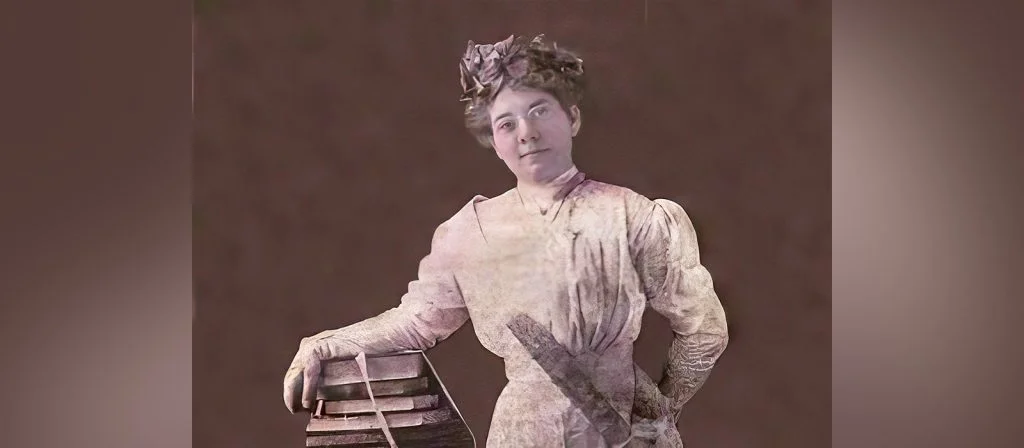
She wanted to marry at a very young age in order to leave her strict father’s home. Against her will, she married Ramón Fajardo Gamboa. Her husband humiliated her through infidelities and an unstable lifestyle, and he forbade her from keeping a typewriter at home because he considered literature a waste of time. “Contrary to this, her literary life became more intense because literature was where she found solace and her only peace, as well as an outlet for her longing for emancipation,” researcher Yohamna Depestre writes.
Her anguish, however, had deeper roots than an unhappy marriage. María Luisa realized that women were marginalized and destined solely for domestic life, and that realization turned her thirst for knowledge into anxiety and inner conflict. The writer expressed this in her autobiography, which some scholars regard as Cuba’s first feminist manifesto. The text offers a series of reflections on the condition of women. The poet behaved, in her own words, like a “perfect Latin young lady,” yet her defiance emerged in every poem and every decision.
Literary critics recognize in her work a quality that transcends the brevity of her life. José Antonio Fernández de Castro and Félix Lizaso devoted several pages to her in La poesía moderna en Cuba, published in 1926. Her work was also discussed in La poesía lírica en Cuba, by José Manuel Carbonell, published in 1928; Cincuenta años de poesía cubana, by Cintio Vitier, published in 1952; and the more recent María Luisa Milanés: El suicidio de una época, published in 2005 by scholar María del Carmen Muzio.
In Granma Province, her memory continues to be preserved and honored. The public library in Cauto Cristo bears her name and organizes competitions and literary gatherings at which participants present studies on the wide range of subjects addressed in her work. The Provincial Historical Archive of Granma preserves her personal collection and commemorates the anniversary of her death every October 19 with documents that testify to her life and circumstances. Works about her include titles such as Poetisas cubanas, Cuando la muerte deja de ser silencio, and Dios no te va a entender. Among her best-known poems are “Me ha besado,” “Las mágicas corazas del corazón,” “Morir de ti,” “Relámpagos y truenos,” and “Yo no quiero perder la esperanza.”
More than a century after her death, María Luisa Milanés continues to challenge those who encounter her work. Her poetry, written in notebooks that sometimes ended up in the fire, survived both self-destruction and oblivion. Her final act, a gunshot to the chest at the age of 26, was not an act of surrender but the tragic conclusion of a life that refused to accept the limits imposed upon it. Her memory has not been lost to oblivion. It lives on in every study devoted to her and in every reader who discovers, in her verses, the imprint of a woman who dared to write when the world demanded her silence.
Translated by Luis E. Amador Dominguez
Photos: La Jiribilla