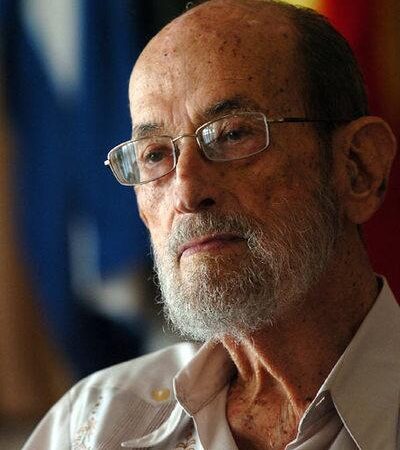
The Craft of Memory: Pedro Pablo Rodríguez and the Light of Martí
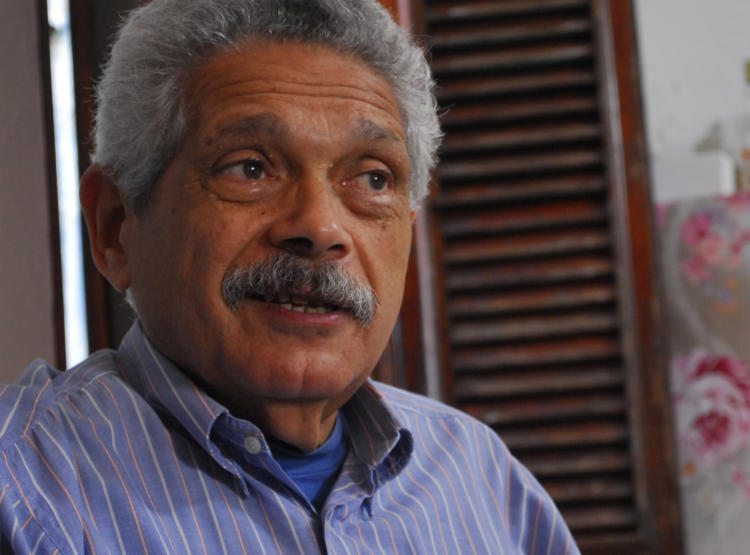
Anniversaries sometimes offer the perfect pretext to pause and look back without haste. Today, the calendar invites us to remember a man who, from the quiet of his study, transformed the way Cuba and the world read José Martí. On this day in 1946, in Havana, Pedro Pablo Rodríguez was born: historian, journalist, and, above all, the tireless editor who devoted half a century to deciphering the fine print of the Apostle.
Those who call Pedro Pablo Rodríguez an architect of Martí’s memory do not exaggerate. His magnum opus, the critical edition of José Martí’s Complete Works, is a feat of painstaking craftsmanship. Scholar Ana Cairo Ballester, in one of her last interviews, captured him in a striking image: “Pedro Pablo didn’t edit; he restored the original heartbeat of every page. He read what Martí meant to say, not what time left imprinted.” That work of restoration demanded Benedictine patience and an erudition that never called attention to itself.
His colleague and disciple, Dr. Carmen Suárez León, stressed at a commemorative panel that “Pedro Pablo’s great lesson was understanding the critical edition as an act of radical modesty. He erased himself so that Martí could emerge.” And it is true: anyone who opens the volumes published by the Centro de Estudios Martianos can sense that the editor’s voice never competes with the master’s; it sustains it, clarifies it, and places each word in its exact context.
Rodríguez belonged to that lineage of Cuban intellectuals who made the Revolution a horizon of meaning, but never a dogma for their scholarly work. From his student days at the University of Havana, he understood that research had to advance with the sure footing of documents. Historian Eduardo Torres-Cuevas remembered him this way: “In Pedro Pablo, the militant and the researcher lived side by side, but when he sat down before a manuscript, the researcher was absolute sovereign.” That sovereignty of evidence, of rigorous cross-checking, allowed him to dismantle myths and fix chronologies that until then wandered through books like ghosts.
It is impossible to evoke him without evoking his desk. Those who visited him in his office at the Centro de Estudios Martianos recall an open book, a magnifying glass, and dozens of papers always waiting their turn. Editor Marta Lesmes Albis, who worked at his side for more than two decades, once confessed: “I learned more about Martí during coffee breaks with Pedro Pablo than in all my university seminars. He would start talking about a passage from La Edad de Oro and, suddenly, we were discussing the New York press of the 1880s.” That ability to weave connections, to shift the focus from the particular to the universal, defined his quiet, steady teaching.
His work did not remain confined within the island’s borders. Rodríguez delivered lectures and shared his findings at universities across Latin America and Europe, always in that measured tone that characterized him. Uruguayan critic Jorge Gómez Manrique, in a review for a specialist journal, observed: “The Cuban critical edition, under Rodríguez’s direction, went far beyond archival zeal. It is a work of thought, a dialogue between centuries that challenges any attentive reader.” To read Martí through Rodríguez’s footnotes is, in a sense, to read two men who understand each other across time.
We owe to Pedro Pablo Rodríguez, in no small measure, the contemporary image of Martí stripped of pedestals—more human and therefore more profound. His work reminds us that culture is built in the half-light of archives, in the calm of those who are indifferent to haste. As essayist Fina García Marruz wrote in a letter he treasured: “You, who work with the Master’s papers, uphold the invisible scaffolding of the nation.” Perhaps that is the best definition of his legacy: Pedro Pablo Rodríguez is one of those discreet pillars who, without making a sound, keep the ground of our memory from giving way.
Today we celebrate a man who loves books with a monk’s devotion and an artisan’s patience. A man who, while others chased headlines, remained there, bent over the yellowing page, deciphering the words that still sustain us.
Translated by Luis E. Amador Dominguez
Photo : Agustín Borrego Torres.