Harold Gramatges and His Vision of a Cuban Modernity
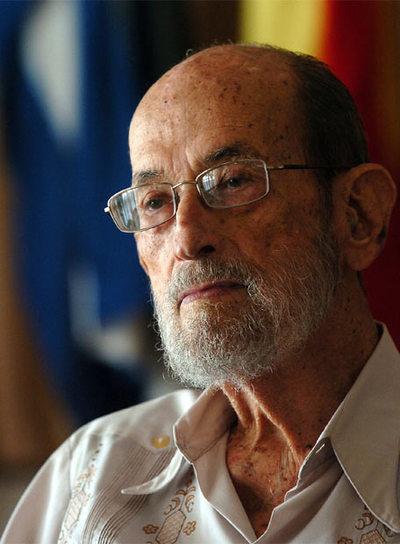
Born in Santiago de Cuba on September 26, 1918, Harold Gramatges began his musical studies in his native city, where the artistic milieu of the former capital of eastern Cuba left a lasting mark on him. His early training took place under the guidance of teachers who introduced him to piano and composition, but it was in Havana that his vocation found its definitive direction. Musicologist María de los Ángeles Córdova, in her study of symphonic composition in republican Cuba, notes that Gramatges belonged to a generation that felt an urgent need to break out of the island’s isolation and connect with the most advanced currents in European musical thought, without giving up the search for a voice of its own.
His trip to Paris in the 1940s was a decisive chapter in his development. There, he studied with Darius Milhaud and attended some of the most radical concerts of the postwar period, where the ideas of Stravinsky, Schoenberg, and Bartók were passionately debated. “Paris gave Gramatges the awareness that modernity was not a style but an attitude; a way of questioning the sonic material without dogma, with a freedom he would later know how to bring into the Cuban context,” observed composer and critic Roberto Valera. Far from turning him into a follower of European trends, that lesson enabled him to return to the island with a renewed technical arsenal and a sensibility attuned to the stimuli of his surroundings.
The 1950s were particularly productive for Gramatges. In 1951, together with other intellectuals and artists concerned with revitalizing Cuban cultural life, he founded the Sociedad Cultural Nuestro Tiempo. The organization, which brought together musicians, writers, painters, and filmmakers, became a forum for debate and a platform for disseminating contemporary artistic currents. In that setting, Gramatges exercised a discreet but firm leadership, convinced that contemporary music should move beyond the conservatories and take its place in the broader civic conversation.
His catalog encompasses a wide range of genres: symphonic works, chamber pieces, piano music, songs, incidental music for film and theater, and a remarkable body of choral works. Among his most frequently performed compositions are Sinfonía en mi bemol (1943), Suite cubana (1947), and Misa cubana (1960), all of which reveal the deeply Cuban, synthesizing impulse that runs throughout his work and sets him apart from composers who merely juxtaposed different musical materials.
Another of his major contributions was his work as a teacher. For decades, he taught composi-tion, orchestration, and analysis at the Conservatorio Amadeo Roldán and the Instituto Superior de Arte, where he trained several generations of Cuban composers. Musicologist Danilo Orozco, in an essay on the Cuban school of composition, described Harold as a teacher in the most demanding sense of the word: “(…) he did not impose a style or create disciples in his own image; he compelled his students to think, to substantiate every decision, to know the tradition before attempting to transcend it.” That pedagogical ethic, grounded in high standards and respect for the student’s autonomy, explains the diversity of paths that emerged from his classroom and the unanimous gratitude with which his pupils remember him.
Gramatges’s relationship with the revolutionary cultural institutions was both complex and productive. He held prominent positions, including the presidency of the Unión de Escritores y Artistas de Cuba and the directorship of the music department at Casa de las Américas, where he promoted the dissemination of contemporary Latin American music. Yet his commitment to avant-garde music did not always coincide with the prevailing aesthetic orientations of cultural policy during the early revolutionary years. Essayist and musicologist Laura Vilar Álvarez has noted that Harold maintained a critical independence that brought him misunderstanding, but also earned the respect of those who saw him as an artist of integrity, incapable of subordinating his sonic quest to the slogans of the moment.
Gramatges’s piano works deserve special mention for their richness and internal coherence. Pieces such as Sonata en fa sostenido menor, Tres danzas para piano, and the Preludios cubanos cycle (1956) reveal a profound knowledge of the instrument and a harmonic imagination that naturally incorporates the rhythmic cells of son and contradanza into a post-Impressionist idiom. For pianist and educator Alicia Perea Maza, “(…) Gramatges’s preludes are not picturesque miniatures, but serious explorations of the piano’s expressive possibilities; each is a microcosm in which form, color, and gesture converge with almost mathematical precision.”
His legacy continues to resonate today in the work of Cuban composers who, whether in aca-demia or on the independent scene, continue to explore the relationship between contemporary musical language and cultural memory. In the words of musicologist María de los Ángeles Córdova: “Gramatges taught Cuban music that modernity is not imported but built; that roots are not a burden but a quarry; that the composer is, above all, an interpreter of his time.”
Ultimately, revisiting Harold Gramatges’s life score is an invitation to hear the history of Cuban music as a living process, shaped by ruptures and continuities, journeys and returns, questions passed down from one generation to the next, and answers that never put an end to the mystery. His work does not belong to the past because it speaks to the present with the force of a man who believed, to the very end, in the transformative power of sound. On an island where music is perhaps the deepest form of collective knowledge, that faith continues to open new paths.
Translated by Luis E. Amador Dominguez
Photo: Cubarte