Roberto Faz and the Essence of Son
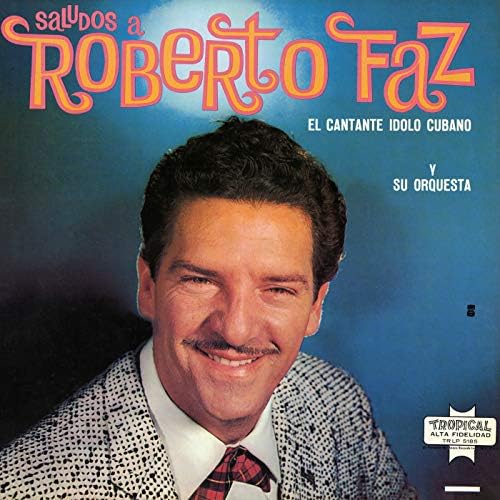
On September 18, 1914, as Havana began widening its avenues and music cafés filled with trova singers, a boy was born in the Los Sitios neighborhood who, unbeknownst to him, was destined to change the way Cuban dance music understood itself.
Roberto Faz Montero inherited neither wealth nor a musical lineage. What he did inherit was a remarkable ear, a velvet voice, and a rhythmic intuition that would make him one of the most refined figures in Cuban son. His name, now firmly enshrined in the history of popular music, conjures images of brightly lit ballrooms, couples turning in time to an impeccable orchestra, and a singer who transformed dancing into an elegant ritual without ever sacrificing the infectious flavor of the neighborhood.
His training was essentially self-taught, forged in tenement jam sessions, family gatherings, and neighborhood movie theaters where people sang before the feature began. His first great lessons came through direct contact with the old-school soneros, musicians who roamed Havana’s courtyards with their guitars and claves.
Researcher Alicia Valdés Cantero, in her well-documented study of 20th-century Cuban song, emphasizes: “Faz understood from a very young age that son was not merely a rhythm for dancing, but a genre that demanded impeccable diction from the singer, an exact sense of phrasing, and the ability to tell stories in three minutes.” This profound understanding of the genre set him apart from other singers of his generation, who were often more concerned with vocal showmanship than narrative clarity.
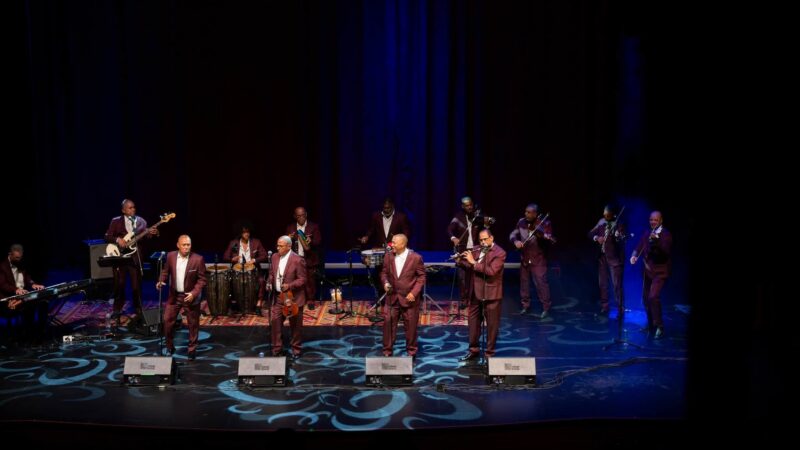
The 1940s were decisive in his career. After brief stints with several lesser-known groups, Faz joined the Cheo Belén Puig Orchestra and later the legendary Conjunto Kubavana, where his voice began to attract attention. But it was in 1948 that he took the step that would immortalize him: he founded his own ensemble, Conjunto Roberto Faz, a group that combined the classic structure of son with a brass section that brought brilliance and breadth to its sound.
Musicographer Helio Orovio notes in his encyclopedic dictionary of Cuban music that “(…) Conjunto Roberto Faz was characterized by an unusual balance between fidelity to the son tradition and a harmonic modernity that connected with feeling, the romantic-song movement that was revolutionizing Havana’s ballrooms at the time.” This dual affinity—with both the world of son and that of the bolero—allowed Faz to move effortlessly between dancing and attentive listening, between celebration and intimate confession.
One of Roberto Faz’s greatest contributions to Cuban music was his treatment of the voice as a melodic instrument. He did not sing over the orchestra but with it, becoming part of the sonic fabric like another brass instrument. His diction, praised by critics and fellow musicians alike, was a lesson in clarity: every word could be understood, every phrase had room to breathe, and every refrain invited the audience to sing along. Pianist and bandleader Frank Emilio Flynn, a central figure in Havana’s feeling movement, said in an interview collected by researcher Leonardo Acosta that Faz was “a musician with a voice”: “(…) he knew harmony, he knew clave, he knew when to come in and when to remain silent. That is why dancers adored him and musicians held him in such deep respect.”
Faz’s repertoire includes undisputed classics of the Cuban songbook. Songs such as El agua del clavelito, Suena tu bongó, La mala maña and, above all, Boda de amor became emblematic of an era when Cuban dance music was reaching audiences across the continent.
Radio broadcasting was a powerful ally in that expansion. Live programs, broadcasts from cabarets, and recordings for the emerging record industry carried his voice far beyond Havana, turning him into a household name in countries such as Mexico, Colombia, Venezuela, and the United States, where Latino communities followed his records with devotion. Journalist Mayra Martínez, in a chronicle published in Bohemia to mark the musician’s centenary, recalls: “(…) Havana’s radio stations vied to feature Conjunto Roberto Faz, because its music guaranteed both ratings and prestige; it was the soundtrack of a city that was modernizing without abandoning its roots.”
Faz’s relationship with the feeling movement deserves particular attention. Emerging in the 1940s around figures such as José Antonio Méndez, César Portillo de la Luz, and Ñico Rojas, the movement sought to renew the harmonic language of Cuban song, drawing on jazz influences and embracing a sensibility close to the intimate bolero. Faz was not an official member of the group, but he maintained close ties with its leading figures and shared their pursuit of expressive refinement. Researcher Alicia Valdés Cantero argues that Faz served as a bridge between feeling and son: “(…) he brought the harmonic sophistication of the bolero composers to the dance floor and returned to feeling the streetwise pulse that risked being lost in the ballrooms.” This mediating role is one of the keys to his enduring legacy: he knew how to be elegant without becoming aloof, popular without becoming vulgar.
Roberto Faz’s legacy extends far beyond his death in 1966, when the musician was just 52 years old. His Conjunto remained active for decades, keeping alive a repertoire that has been revisited by salsa, timba, and traditional son groups. Commemorating his birthday, therefore, is an invitation to rediscover an essential chapter in Cuban music. It is not an exercise in nostalgia, but an act of cultural justice. His work demonstrates that dance music can be refined and accessible at the same time, profound and festive, traditional and modern.
Translated by Luis E. Amador Dominguez
Photo: Amazon