National Museum of Fine Arts Celebrates Fidel
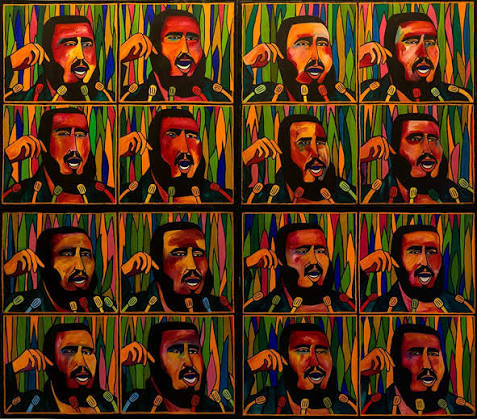
The National Museum of Fine Arts of Cuba joins the celebrations marking the centenary of the birth of the great statesman Fidel Castro Ruz through the art, life, and work of a key figure in the history of the country and in the development of revolutionary thought worldwide.
For this special occasion, the Museum has selected Oye América, a painting by visual artist Raúl Martínez created in 1967, the Havana-based institution said in a press release.
With an impassioned spirit, the painter creates a multiple portrait of the Cuban leader, capturing the same fervent act of addressing the vast audiences before whom Fidel spoke. And that act of speaking to Cuba and the world as no one else could reaches us once again today through this painting, while his words continue to resonate and reverberate amid the current geopolitical challenges facing our continent. “Oye América!” Fidel continues to warn us, a century later. The National Museum of Fine Arts, the statement adds, unequivocally joins that call.
An indispensable figure in contemporary Cuban art, Martínez was a painter, graphic designer, and photographer who moved from Abstract Expressionism to become a leading exponent of Pop Art in Cuba, according to a post published by the National Council of Plastic Arts on its Facebook page about this founding member of the Sociedad Cultural Nuestro Tiempo and Grupo Los Once.
Raúl Martínez’s work reflects the key moments in post-1959 Cuban culture. He created such iconic visual works as his series of portraits of José Martí and Che Guevara, as well as his emblematic Isla 70, using photography and collage with vibrant colors. He served as art director for publications such as Lunes de Revolución and designed numerous covers for the Cuban Book Institute. In 1994, he received Cuba’s first National Award for Plastic Arts, as well as an honorary Doctor of Fine Arts degree from the University of the Arts of Cuba. His legacy lives on in the collections of the National Museum of Fine Arts of Cuba and in the visual memory of the Cuban nation.
Translated by Luis E. Amador Dominguez
Photo: National Museum of Fine Arts of Cuba