Miguel de Carrión: The Mirror We Still Need
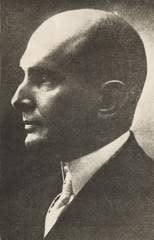
The news broke one summer morning in Havana, brief and barely above a whisper. On July 30, 1929, in a modest wooden house in the Lawton district, Miguel de Carrión y Cárdenas drew his last breath. Seventy-five years of life came to an end with him, yet the city, which owed so much to his gaze, barely paused to bid him farewell. The newspapers published perfunctory obituaries; Diario de la Marina offered a few lines of obligatory tribute; the literary circles he had frequented for decades maintained an uncomfortable silence. One of the founders of Cuban psychological fiction had died, and the island seemed intent on confirming what Carrión himself had written without concessions: hypocrisy is the other face of our national soul.
Carrión was a physician before he was a novelist. He graduated in 1887, practiced in poor neighborhoods, and came to know the physical and moral destitution of a society caught between the final throes of colonialism and the first stirrings of republican modernity. That dual experience—the clinical observation of the body and the unflinching dissection of character—gave his work a singular texture. When he published El milagro in 1903, many readers did not know what to make of that slender novel about the turmoil of a mature man confronting the possibility of late love. Its pages contained none of the picturesque local color that pleased the salons, nor the edifying moral lesson demanded by conservative critics. Instead, there was a psychological tremor, a meticulous attention to the recesses of consciousness that very few writers of his generation dared to explore.
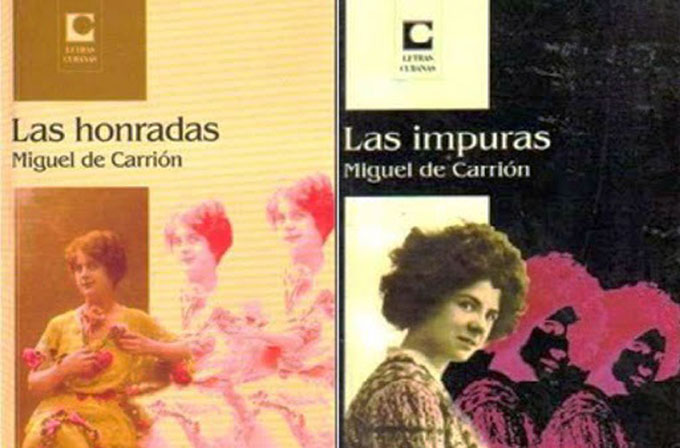
His consecration as a major author would come with two novels that time has turned into indispensable classics of Cuban literature: Las honradas (1917) and Las impuras (1919). Read together, they form a fierce diptych on the condition of women in the newly established republic. Carrión dared to tell what his contemporaries preferred to keep silent: marriage as an economic transaction, virginity turned into a commodity, and female desire stifled by bourgeois double standards. The literary critic Cira Romero has aptly observed that: «(…) Carrión does not write about women; he writes from the discomfort of one who understands that masculine honor is built upon the forced renunciation of women.» Indeed, Victoria, the protagonist of Las honradas, embodies that renunciation: a woman who sacrifices her emotional freedom to preserve the social order, thereby revealing the silent violence embedded in that order. Teresa, in Las impuras, crosses the forbidden frontier and pays the price society reserves for those who challenge the patriarchal pact. Neither escapes; both are subjugated. Yet in their pages beats, for the first time in Cuban narrative, the uncomfortable question: who is really prostituting whom in this society?
The scholar Salvador Bueno, in a study of the Latin American novel, placed Carrión within a tradition that begins with Cirilo Villaverde and flows into the narrative of the Revolution. Yet such a lineage is problematic. Carrión was not a novelist of social denunciation in the manner of nineteenth-century realism; his gaze does not pursue open accusation or institutional reform. His literature operates in a subtler, perhaps more corrosive, fashion: it explores how ideology takes up residence in the bedroom, how power circulates through caresses, and how official morality reproduces itself through individual desire. That is why his relevance remains disconcerting. Anyone who reads Las impuras today finds, beneath the surface of a prose that occasionally slips into excessive explanation, a core of truth that has not aged: the suspicion that women’s sexual freedom remains the unfinished business of Cuban culture.
The journalist and critic Francisco Ichaso, one of the few who valued him without reservation in his own time, wrote in the magazine Avance that Carrión: «(…) has descended into the cellars of the Cuban soul with a dim lantern, and what he has seen is not pleasant.» The image is precise. Carrión illuminated zones that literature preferred to keep in darkness. And he did so at the very moment when the republic was being built upon a discourse of progress and decorum that demanded its internal contradictions be silenced. While the politicians of the era celebrated the modernization of Havana, Dr. Carrión was taking the pulse of a society sick with appearances. It was not a moralistic diagnosis, but a narrative observation: his characters suffer, doubt, and deceive themselves with a verisimilitude that disturbs because we recognize ourselves in them.
Yet posterity has not been entirely fair to Miguel de Carrión. Although his major novels are reissued and studied in university curricula, his figure remains in a discreet second tier of the national canon. He is recognized as a precursor of the psychological novel, yes; he is mentioned alongside Loveira and Castellanos in surveys of republican narrative, also. But the reading of his work remains in a zone of academic respect that rarely translates into popular enthusiasm. Why has Carrión not attained the mythic stature of José Martí or the popular appeal of Alejo Carpentier? Perhaps because his mirror returns an image we are still unwilling to confront directly. Martí offered an ideal of Cuban identity founded on sacrifice and virtue; Carrión laid bare the cracks within that virtue. He is not an author who consoles: he is an author who confronts.
The researcher Denia García Ronda, in an essay on foundational Cuban narrative, points out: «Carrión writes against the silence imposed upon women, but also against the silence that the republic imposes upon its own internal contradictions.» This observation allows us to read his work as an act of intellectual resistance. In an era that demanded celebration of the newly established order, he chose instead to narrate its hidden costs. And he did so without stridency, without programmatic declarations, simply by placing at the center of his plots what no one wanted to see: female desire, masculine hypocrisy, and the irreparable solitude produced by a morality based on mutual surveillance.
On July 30, 2029, one hundred years will have passed since the death that Havana met with indifference. Perhaps then—or perhaps now—is the moment to ask ourselves whether we have truly read Miguel de Carrión. It is not a matter of erecting a belated monument or drafting bureaucratic tributes. It is a matter of returning to his pages with the willingness to look into an unretouched mirror, because Carrión did not write about a closed past: he wrote about the mechanisms that still regulate the intimate lives of Cubans today. His inner physician continues to deliver diagnoses we would prefer not to hear. And that, precisely, is the highest function of literature in any society: to say what hurts, to name what is hidden, to unsettle the tranquil conscience. In a country accustomed to hagiographic narratives, Carrión’s work persists as a crack through which a rough and liberating truth seeps.
The novelist died alone, in a humble house, with meager resources and without the public recognition he deserved. But his characters—Victoria, Teresa, and that physician from El milagro who so closely resembles him—continue speaking to us every time we open his books. And in that conversation, where the intimacy of a century ago touches our own, Miguel de Carrión proves that he is more alive than many of those who forgot him.
Translated by Luis E. Amador Dominguez
Photo: La Demajagua