Virgilio Piñera: Writing Against Silence
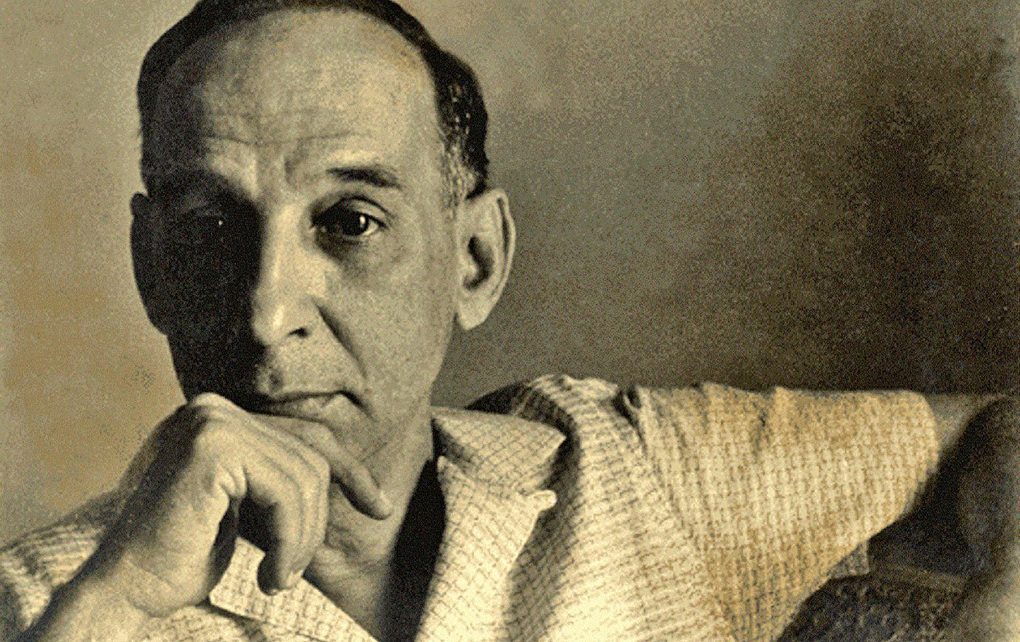
Virgilio Piñera Llera, born in Cárdenas on August 4, 1912, belongs to the lineage of authors who are not read from the distance reserved for monuments, but with the urgency of those seeking answers to questions that still ache. His work —poetry, short stories, novels, theater, and essays— runs through 20th-century Cuban literature like an underground current that surfaces in moments of crisis and sinks again when critics prefer to forget it. Essayist and fiction writer Antón Arrufat wrote a phrase that captures the paradox of his legacy: “Virgilio was a writer without a generation, because no generation has ever fully known what to do with him. And yet no generation has been able to do without his shadow.”
His childhood unfolded in a provincial city where boredom and social conventions weighed like a slab over any hint of individuality. His father, a railway engineer, embodied the practical mindset that the future writer would come to reject with lucid disdain; his mother, a schoolteacher, instilled in him a love of books and a sensitivity that clashed with the narrow atmosphere of Republican-era Cárdenas. In 1925, the family moved to Camagüey, and in 1938, he made the definitive leap to Havana, where he enrolled in the School of Philosophy and Letters at the University of Havana. Poet and critic Enrique Saínz highlights a fundamental point: “Piñera arrived in Havana with two certainties: that he wanted to be a writer and that being a writer in Cuba meant confronting a tradition that had made tropical scenery and rhetorical complacency its hallmarks. He rebelled against both from the very beginning.”
The year 1941 marked a milestone in Cuban literature with the publication of La isla en peso , a long poem he conceived as a reckoning with the island’s preceding poetic tradition. In contrast to the embellished landscape poetry and the celebration of a superficial Cuban identity, his poem presents a suffocating island, burdened by a light that does not illuminate but rather crushes, inhabited by bodies that sweat and endure the tropics as a sentence. Its famous opening lines —“The damned circumstance of water everywhere / forces me to sit at the café table”— constitute a declaration of principles and an act of rupture that contemporary critics received with bewilderment. Researcher Luisa Campuzano argues: “(…) with La isla en peso, Piñera founded a poetics of negativity that is not nihilism, but rather a form of knowledge: only by stripping reality of its comforting veils can the poet gain access to a deeper truth.”
That same negativity runs through his short stories, collected in volumes such as Cuentos fríos (1956) and El que vino a salvarme (1970), works in which absurdity, cruelty, and black humor function as instruments for dissecting the human condition. In stories such as “La carne” —where a man literally eats himself in front of the indifference of his neighbors— or “El álbum” —where a woman builds her identity from photographs that do not belong to her—, he takes to their ultimate consequences a narrative logic that places him alongside Kafka and Borges, while retaining an unmistakably Cuban flavor. Writer and essayist Abilio Estévez has written: “(…) Virgilio’s stories are the fiercest mirror ever held up to Cuban society. No one wants to look into that mirror, but everyone knows that the mirror does not lie.”
Theater occupies a central place in his body of work and is perhaps the field where his drive for renewal encountered the greatest resistance. Works such as Electra Garrigó (1941), Aire frío (1959), and Dos viejos pánicos (1968) sought to create a Cuban theatrical language that did not depend on costumbrismo or the sainete tradition inherited from the 19th century.
Electra Garrigó, which transposes Greek tragedy into the setting of a middle-class Havana family, is considered the first work of contemporary Cuban theater and, upon its premiere, provoked reactions ranging from enthusiasm to outrage. Playwright and director Carlos Díaz has noted: “Virgilio gave Cuban theater its initial kick toward modernity. Without that kick, without that Electra who speaks in Cuban Spanish and eats papaya, later theater would be unimaginable.”.
The novel La carne de René (1952) brings together many of Piñera’s recurring obsessions: the body as a territory of conflict, family alienation, the absurdity of social conventions, and a caustic view of political power. Its protagonist, a young man who resists the two major institutions seeking to shape him —the bourgeois family and the revolutionary organization— embodies an uncomfortable rebellion that fits within no orthodoxy. The novel went almost unnoticed at the time of its publication and had to wait until the 1980s to be rediscovered by a new generation of readers. Critic and essayist Alberto Garrandés has noted that the work anticipates by several decades the dilemmas faced by Cuban intellectuals in relation to power. “Its protagonist is neither a hero nor a villain: he is a man who refuses to become an instrument, and that refusal remains the most subversive of attitudes.”
Piñera’s relationship with the Cuban Revolution is inseparable from both his biography and the reception of his work. During the early years of the revolutionary process, he actively participated in cultural life: he served as editor of the magazine Ciclón, contributed to Lunes de Revolución, and maintained an intense career as a translator and promoter of theater. However, by the mid-1960s, his figure had become increasingly uncomfortable for a cultural policy that was moving toward socialist realism. The years of ostracism did not break his creative spirit. In the shadows of his Havana apartment, he continued writing poems, short stories, and plays, storing them in folders with the hope that one day they would see the light of day.
Piñera’s public rehabilitation began in the late 1980s and was consolidated during the 1990s, when new editions of his works and theatrical productions returned him to the center of the Cuban literary canon. The National Literature Prize, however, was not awarded to him until the year of his centenary, in 2012, a gesture of recognition that many considered long overdue. Poet and essayist Fina García-Marruz, an essential voice of the Orígenes group —with which Piñera had maintained a troubled relationship—, wrote in a posthumously published essay: “Virgilio disrespected all of us, and for that reason he was the one who showed the greatest respect for literature. He did not write to please anyone, and that is why his work pleases those who seek in books something more than confirmation of what they already know.”
Virgilio Piñera died in Havana on October 18, 1979, at the age of sixty-seven, in the same city that had witnessed both his brilliance and his eclipse. Over the years, his grave has become a place of pilgrimage for young writers who recognize in him a precursor and a master. As another anniversary of his birth is commemorated, his work continues to challenge Cuban readers with the force of a text whose meanings have not been exhausted. His metaphysical laughter, his merciless lucidity, and his refusal to turn literature into a vehicle for consolation or propaganda constitute a legacy that new generations claim as their own. As he himself wrote in one of his posthumous poems:
“All my life I have written for a future reader.
That reader has arrived.
He asks me no questions.
He reads.”
And indeed, Cuba continues to read him, with the unease and wonder provoked only by truly indispensable writers.
Translated by Luis E. Amador Dominguez
Photo: Cubaperiodistas