Beyond the Method: Stanislavski’s Enduring Legacy on the Cuban Stage
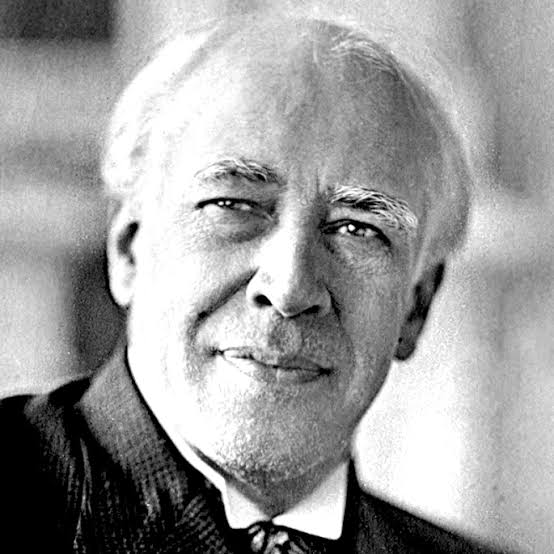
Konstantin Sergeyevich Stanislavski died in Moscow on August 7, 1938, eighty-eight years ago, yet his ideas continue to reverberate through rehearsal rooms, stages, and acting classrooms across Cuba with a vitality that defies any notion of obsolescence. The man who revolutionized twentieth-century theater pedagogy never set foot on the island, never spoke Spanish, and was likely unaware of the existence of a theatrical tradition in the Caribbean. Yet his legacy—that system of actor training he conceived as an endless quest rather than a closed set of rules—took deep root in Cuban culture, becoming one of the hidden currents that helps explain the strength of the country’s contemporary theater.
The researcher and theater scholar Rosa Ileana Boudet, one of the most authoritative voices in tracing this map of influences, puts it succinctly: “Stanislavski arrived in Cuba not as a dogma, but as a question. And it was Cuban actors and directors who, by answering that question from within their own reality, transformed it into a path of their own.”
To understand this fruitful reception, it is necessary to remember that the Stanislavski system is not, strictly speaking, a method, but rather a process of discovery that its creator himself revised and refined over four decades. Born in 1863 into a family of Moscow industrialists, Stanislavski founded the Moscow Art Theatre in 1898 together with Vladimir Nemirovich-Danchenko, creating a space where acting ceased to be a craft based on theatrical effects and became an exploration of the truth of human behavior onstage.
His rejection of empty declamation, stereotyped gestures, and the artificial conventions of bourgeois theater led him to develop concepts that are now part of every actor’s common vocabulary: emotional memory, given circumstances, the “magic if,” the through-line of physical actions, and muscular relaxation as a prerequisite for expressiveness. Russian theater critic and historian Konstantin Rudnitsky wrote in his authoritative biography of the master: “Stanislavski did not invent truth in the theater, but he was the first to transform the search for that truth into a rigorous, teachable, and above all ethical system of work.”
Stanislavskian thought reached Cuba through multiple channels and successive waves, a process that theater scholar Esther Suárez Durán has documented in meticulous detail. The first references to the Moscow Art Theatre arrived in the 1940s through publications and contact with Spanish Republican exiles connected to theatrical avant-garde movements. But it was during the 1960s, following the triumph of the Revolution, that the systematic study of the system became part of the training programs of the National Art School and of the theatrical groups that emerged throughout the country.
“Cuban theater inherited a stage tradition that aspired to modernity but lacked a solid pedagogy of acting. Stanislavski filled that gap and provided a technical foundation that made it possible to professionalize the stage without reducing it to a single model,” explains Suárez Durán in her monographic study on the subject.
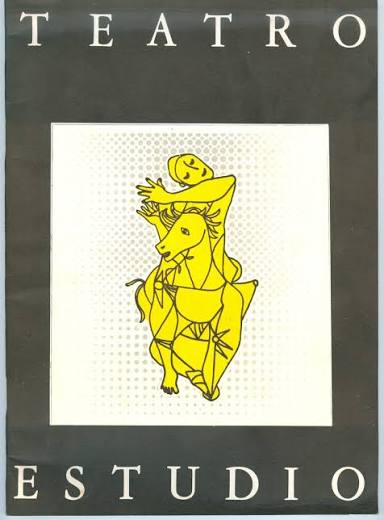
Two figures were essential to understanding the adaptation of the system within the Cuban context: Vicente Revuelta and Raquel Revuelta, siblings who founded Teatro Estudio in 1958 and became the foremost promoters of a Cuban, open-minded interpretation of Stanislavski’s legacy.
Vicente Revuelta, a gifted director and teacher, traveled to the Soviet Union on several occasions and studied directly with the master’s disciples, but he avoided the temptation of mechanical transplantation. In an interview shortly before his death, Revuelta stated: “Stanislavski taught me to ask myself why I do what I do onstage. That question is universal. The answers, however, have to be Cuban; they have to smell of the tropics, they have to hurt with the pain of this place and laugh with the laughter of this place.”
That process of creative appropriation took shape in productions that defined entire eras. In 1961, Teatro Estudio premiered Bertolt Brecht’s El alma buena de Se-Chuan, directed by Vicente Revuelta, combining Stanislavski’s tools of active analysis with Brechtian distancing. The production demonstrated in practice that both systems, often presented as opposites, could enter into dialogue in the service of a distinct theatrical language.
Raquel Revuelta, meanwhile, developed a teaching career whose influence is difficult to overstate. For decades, first at the National School of Theater and later through the company that bore her name, she trained generations of actors in a way of understanding the craft that combined Stanislavskian rigor with a keen sensitivity to the Cuban performer’s physicality, rhythm, and musicality.
Actress Laura de la Uz, a graduate of that school, recalls: “Raquel taught us that emotional memory is not a psychoanalyst’s couch, but a tool to be used with discretion and precision. Her reading of Stanislavski was deeply ethical: the actor is not there to display themselves; they are there to serve the character and the story.”
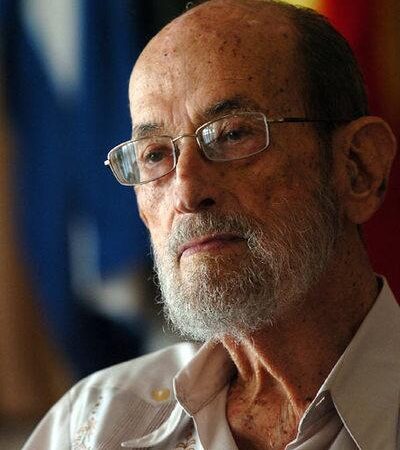
The system’s influence extends beyond theater itself and reaches into Cuban dance and cinema, a little-studied phenomenon that deserves greater attention. Choreographer and dancer Ramiro Guerra, founder of Cuban modern dance, incorporated principles of physical action work into his dancers’ training, convinced that movement could not be reduced to external form but had to emerge from an organic impulse.
In an interview published by Conjunto magazine, Guerra explained: “When I read Stanislavski, I understood something fundamental: the body lies less than words do. If you manage to connect the dancer with an inner truth, movement is transformed without the need to add anything. I applied that lesson throughout my life.”
In cinema, filmmakers such as Tomás Gutiérrez Alea and Humberto Solás worked with actors trained in the Stanislavskian tradition and discovered in them a capacity for character construction that raised the level of Cuban film performances. Titón, as Gutiérrez Alea was affectionately known, wrote in his production notes: “The Cuban actor who has gone through Stanislavski arrives on set with an immense advantage: they know that acting is not pretending, but revealing oneself.”
The 1990s, marked by the hardships of the Special Period, tested the survival of that training tradition. Schools faced extreme material shortages, many actors emigrated, and the urgency of daily survival seemed to work against any long-term educational project. Yet, amid hardship, new experiences emerged that revitalized the Stanislavskian legacy from innovative perspectives.
Teatro El Público, founded and directed by Carlos Díaz, has built an exuberant and provocative stage language that does not reject the system but rather extends it into territories where the body, sexuality, and popular culture become material for theatrical exploration.
Díaz, a declared admirer of Stanislavski, has explained his approach in words that capture the continuing vitality of the legacy: “I do not make Stanislavskian theater; I make theater that would not be possible without Stanislavski. That is very different. The master taught me not to betray the actor’s truth, and that truth can wear feathers, sequins, or nothing at all; it can scream or whisper. Truth does not have a single aesthetic.”
As another anniversary of Stanislavski’s death is commemorated, Cuban theater continues to question his legacy with the same mixture of respect and defiance that characterized the pioneers of his reception on the island. There is no canonical “method” or Stanislavskian orthodoxy in Cuba, and perhaps that absence of rigidity is the clearest proof that the Russian master’s ideas have not become museum artifacts.
They remain, as Vicente Revuelta wished, a question: the question of how to make an actor truly live onstage; how to build a character through organic experience rather than imitation; how to transform theater into an act of understanding rather than harmless entertainment.
That question, first posed amid the snow of Moscow more than a century ago, still echoes today in rehearsal halls with the same urgency it carried in the 1960s. As critic Vivian Martínez Tabares, one of the indispensable voices in contemporary Cuban theater criticism, wrote: “We still need Stanislavski. Not to copy him, but to remind ourselves that theater, when it is genuine, is always an act of faith in humanity.”
Translated by Luis E. Amador Dominguez