Ñico Saquito and the Art of Turning Popular Wisdom into Song
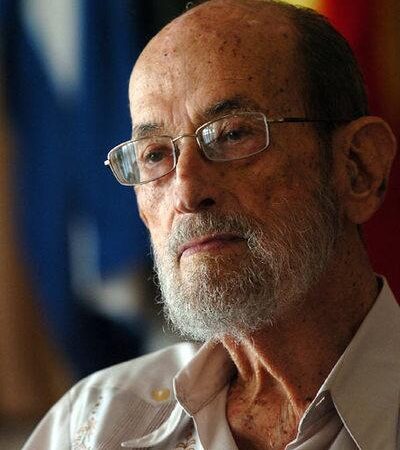
Benito Antonio Fernández Ortiz, better known as Ñico Saquito, died in Havana on August 4, 1982, and with him faded one of the most genuine and mischievous voices in 20th-century Cuban popular music. A composer, guitarist, and singer, Saquito embodied like few others the spirit of the guaracha and son montuno—genres that, in his hands, were far more than mere vehicles for dance and entertainment. They became sharp social chronicles, streetwise philosophy, and a way of understanding life in which wit and irreverence served as an antidote to adversity. Musicologist Helio Orovio, in his indispensable Diccionario de la música cubana, captured his essence with remarkable economy: “Saquito was the musical chronicler of Cuban picaresque humor, an urban minstrel who transformed double entendre into high art.”
He was born on January 17, 1901, in Santiago de Cuba, the city that for centuries had served as a crucible for the musical traditions of eastern Cuba. His childhood unfolded in the Tivolí neighborhood, a popular district where descendants of French, Haitian, African, and Spanish communities lived side by side, and where son, trova, and guaracha filled the air. Saquito himself recalled, in one of the few interviews he granted during his later years, that his nickname was given to him as a child, when he played baseball in the neighborhood lots and a friend shouted, “Throw it, Saquito!”, comparing him to a famous baseball player of the time. The nickname stayed with him forever, and eventually his real name would fade into obscurity. Santiago researcher Lino Betancourt, who interviewed him extensively in the 1970s, recorded a revealing confession: “Ñico once told me that he had never studied music because there was no money for it at home. His school was the street, the port, the market, the bars. That was where he learned that music is not written—it is lived.”
His artistic journey began in Santiago during the 1920s, when he became part of the group of troubadours who gathered around Heredia Street and Céspedes Park, sharing serenades, musical duels, and bohemian nights with figures such as Sindo Garay, Manuel Corona, and Rosendo Ruiz. But Saquito was not a traditional troubadour. While those musicians cultivated the long-standing tradition of the Cuban canción, he gravitated toward the more earthy rhythms of son and guaracha, and his lyrics, far from romantic idealization, ventured into the shifting terrain of satire, choteo—that distinctly Cuban blend of irony, irreverence, and playful mockery—and everyday social observation.
Poet and essayist Waldo Leyva has noted: “Ñico Saquito belongs to a lineage of popular creators who do not separate art from life. His songs are not museum pieces but tools for living: they are meant for dancing, laughing, falling in love, and, above all, understanding that existence, despite all its hardships, deserves to be embraced with joy.”
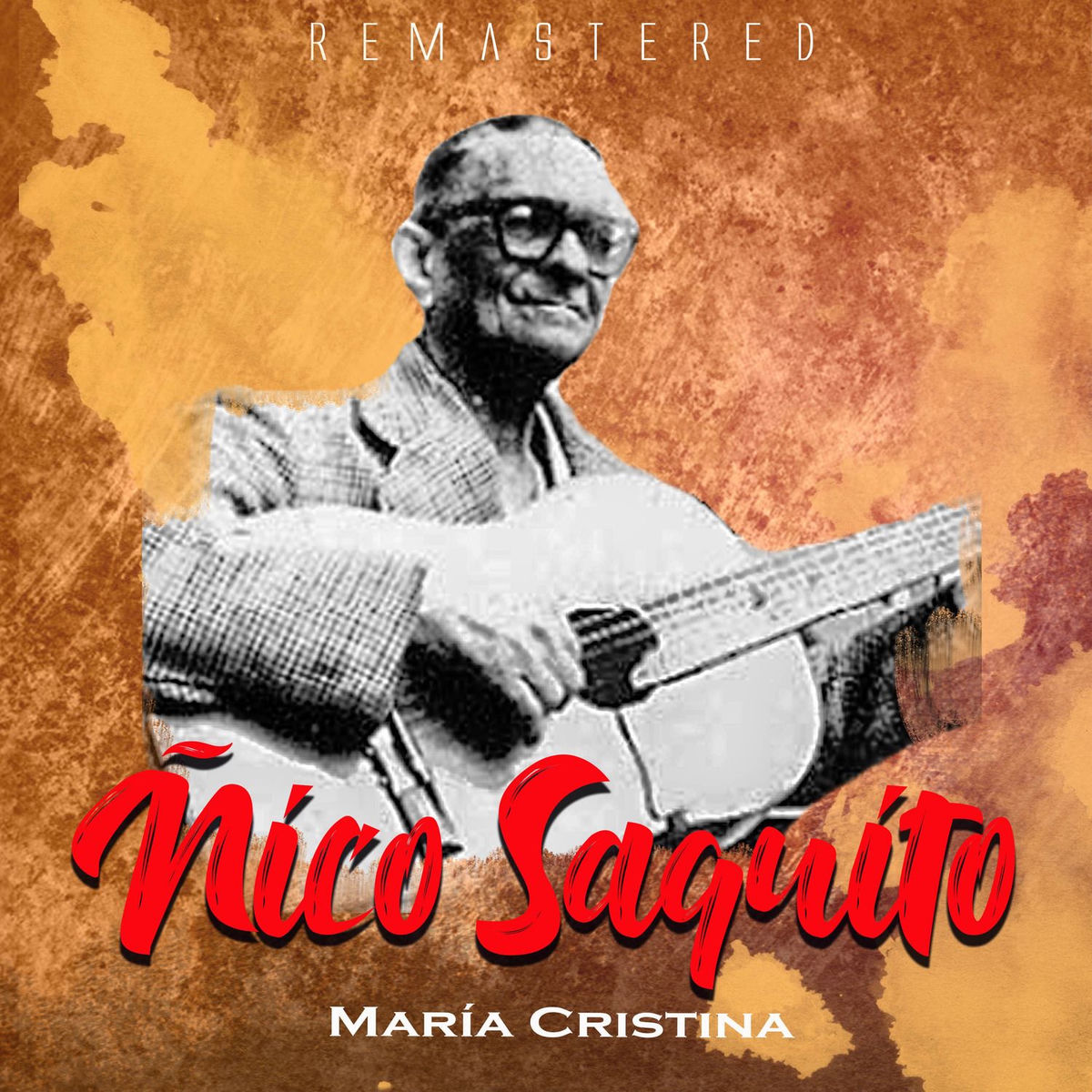
In 1934, he traveled to Havana and formed his first major group, the Cuarteto Saquito, with which he began recording for the RCA Victor label. Those early recordings—María Cristina, Al vaivén de mi carreta, and Adiós compay gato—became instant hits that crossed the island’s borders and established his reputation as one of the most brilliant and inventive composers on the Cuban music scene. María Cristina, in particular, became a classic of the Latin American popular repertoire, a song danced to by generations of listeners who perhaps never stopped to consider the sly humor hidden in its verses.
Journalist and music critic Frank Padrón has observed: “(…) the apparent innocence of Saquito’s lyrics is deceptive. Beneath their humorous surface lies a sharp perspective on power relations, machismo, poverty, and social hypocrisy. His songs are small capsules of social criticism wrapped in the paper of the guaracha.”
The 1940s and 1950s marked Saquito’s period of greatest creative maturity. Having settled permanently in Havana, he composed some of his most memorable pieces—Te escribí un papel, Ojos malignos, and Qué lío tiene esa mujer—and formed the group Los Guaracheros de Oriente, with whom he toured much of Latin America and left behind a body of recordings that became essential references for anyone studying son montuno.
Researcher Jorge Calderón, in an essay devoted to the spread of Cuban music throughout the continent, has documented that: “Los Guaracheros de Oriente were informal ambassadors of a carefree and popular Cuban identity that resonated deeply in countries such as Venezuela, Puerto Rico, and Mexico. During their tours, Saquito carried more than songs: he carried a way of understanding music as a collective celebration and as an exercise in expressive freedom.”
The triumph of the Cuban Revolution in 1959 found Ñico Saquito abroad, and for several years he remained outside the island, living primarily in Venezuela and Puerto Rico. That voluntary or forced exile—the testimonies remain contradictory, and the musician himself never wished to discuss the matter in detail—ushered in a period of reduced visibility in Cuban media, although his songs continued to be heard on the island’s radio stations and record players.
In the 1970s, Saquito returned permanently to Cuba and settled in Havana, where he spent his final years in a modest apartment in Vedado, surrounded by the affection of younger musicians who visited him in search of advice, anecdotes, and perhaps an unpublished guaracha. Singer-songwriter Miriam Ramos, who knew him during that period, recalled: “(…) the old Saquito was a character straight out of his own songs: witty, skeptical, incapable of taking anything too seriously. But when he picked up his guitar and began to sing, one understood that behind that comedian was an artist of absolute seriousness, a profound master of the secrets of rhythm and melody.”
One of the less explored dimensions of his legacy is the influence he exerted on later generations of Cuban musicians. Saquito did not establish a school or leave behind formal disciples, yet his approach to songwriting—that conversational phrasing, that economy of poetic resources, that ability to suggest far more than what is explicitly said—found its way into the work of composers and performers ranging from Los Van Van to the Nueva Trova movement.
The trova singer Silvio Rodríguez, in an interview published by Revolución y Cultura magazine, stated: “Ñico Saquito taught me that a song can be profound without being solemn. His guarachas are small lessons in storytelling: in three minutes, with three chords and a catchy refrain, he tells you a story that stays with you forever. The trova singer Silvio Rodríguez, in an interview published by Revolución y Cultura magazine, stated: “Ñico Saquito taught me that a song can be profound without being solemn. His guarachas are small lessons in storytelling: in three minutes, with three chords and a catchy refrain, he tells you a story that stays with you forever.”
His work also raises important questions about the relationship between humor and resilience in Cuban popular culture. His songs, filled with hidden meanings, double entendres, and choteo, belong to a long-standing tradition of Cuban oral expression in which laughter becomes a mechanism for confronting hardship, authoritarianism, and frustration. Researcher and essayist Samuel Feijóo, in his monumental study of humor in Cuban popular culture, devoted several pages to Saquito’s work and wrote: “(…) in his guarachas, Cubans recognize and celebrate themselves, with their tricks, their little deceptions, and their endless ability to find a sharp edge even in misfortune. That is what the Greeks called catharsis and what Cubans call choteo.”
Ñico Saquito died at Calixto García Hospital in Havana at the age of eighty-one, a victim of cancer that never diminished his lucidity or his sense of humor. According to those who accompanied him during his final weeks, the musician welcomed visitors with a smile and a joke, and until his last days he maintained the habit of sitting on the balcony of his apartment, guitar in hand, playing for the neighbors who watched with quiet affection.
His wake brought together a large gathering of musicians, admirers, and friends who filled the Havana funeral home where he was laid to rest.
As another anniversary of his passing is commemorated, Ñico Saquito’s music retains a freshness that defies the passage of time. It needs no musicological restoration or solemn tributes. It is enough to put on one of his records, hear the strumming of his guitar, and listen to that old fox’s voice that seems to be winking at you, to understand that Saquito belongs to the lineage of the indispensable.
His songs will continue to resonate as long as there is someone willing to dance with their sorrows, laugh at their misfortunes, and sing, as he once did, that “watch out for the echo”—a phrase that is both a warning and a philosophy of life.
Translated by Luis E. Amador Dominguez
Photo: Deezer