X Alfonso: The Sound Architect of a Havana Without Walls
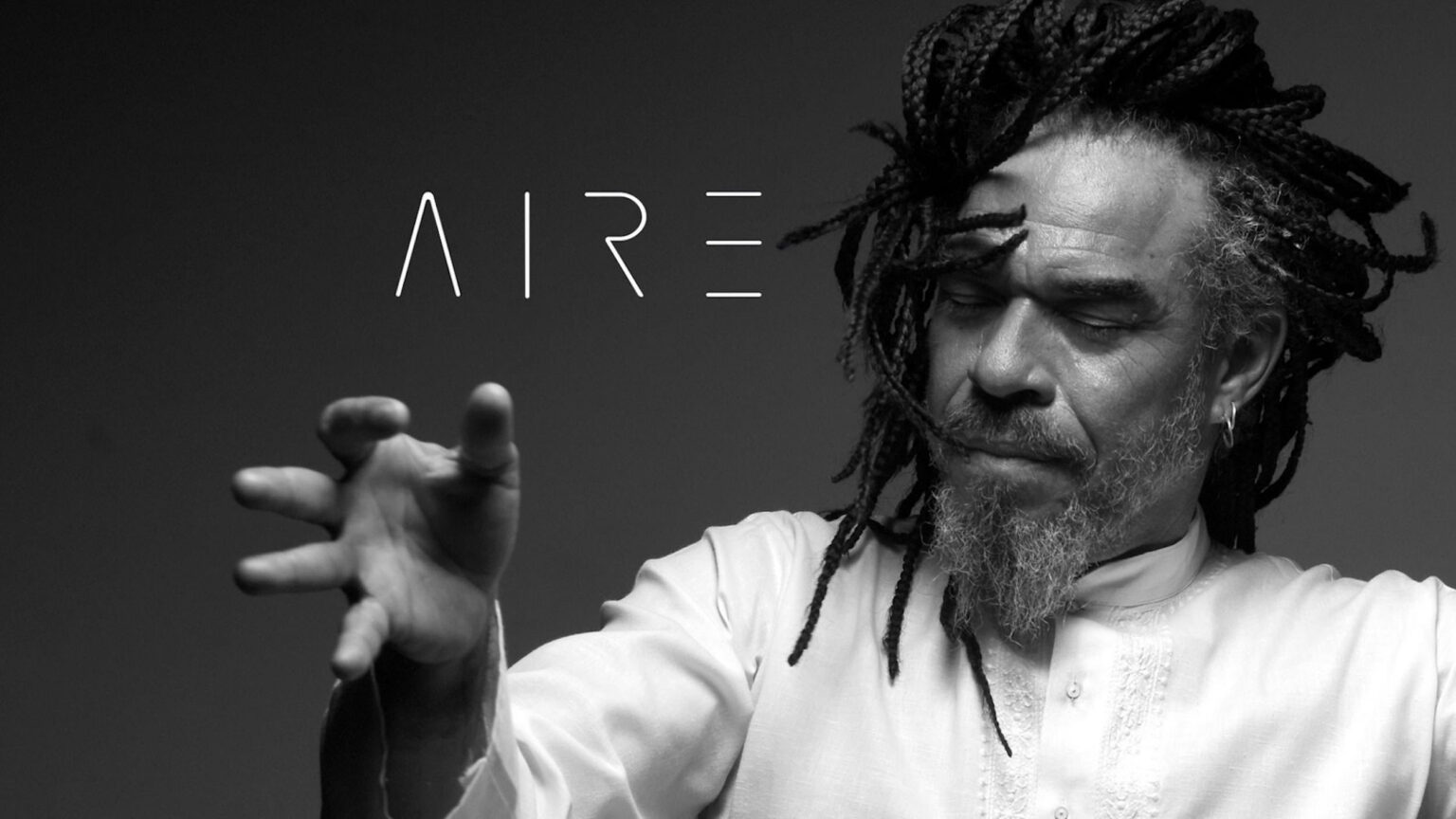
Born in Havana on September 13, 1972, Equis Alfonso knew from an early age that the family name he carried was as much a responsibility as an inheritance. The son of Carlos Alfonso, founder of the legendary group Síntesis, and singer Ele Valdés, young Equis grew up among cables, microphones, sheet music, and a spirit of exploration that would shape his entire career. He was not simply the heir to his family’s talent; he became its continuator, breaking beyond the limits of that legacy to forge a language of his own.
Cuba’s music scene in the 1990s was a hotbed of urgency and hardship. The Special Period, with its material shortages and existential tensions, forced the island’s artists to reinvent themselves. X Alfonso emerged in that context as an unsettling, hard-to-classify figure—a musician who refused to choose between tradition and the avant-garde, or between rock, jazz, rumba, and electronic music.
His first high-impact project, the group Estado de Ánimo, became a laboratory where distorted guitars engaged in dialogue with batá drums and programmed sequences. This was not a superficial exercise in musical fusion; it arose from a vital need to express the complexity of a generation caught between the collapse of European socialism and the persistence of a vibrant cultural identity.
Cuban music critics were quick to recognize the project’s singularity. Musicologist Laura Vilar Álvarez, in her chronicles of Havana’s alternative music scene, observed that Alfonso does not fuse genres merely as a formal experiment: “(…) what he does is capture the sound of a city in transformation, the noise of a Havana that is falling apart and rising again at the same time.” This role as an urban chronicler, an attentive listener to the pulse of the Cuban capital, is essential to understanding the scope of his work. He is not a musician who observes the city from the outside; he is an artist who inhabits it, walks its battered streets, and listens to the street vendors’ calls, the engines, the cajón drums in the solares, and the roar of the Malecón.
His major breakthrough came with his 2005 album Civilización, a work many consider a watershed moment in contemporary Cuban music. On that record, the musician laid out a sonic map of Havana that ranged from intimate trova to streetwise hip hop, from symphonic rock to Afro-Cuban roots music. The lyrics, charged with social criticism and raw urban poetry, became the soundtrack of a generation that saw no reflection of itself in triumphant rhetoric or banal escapism. Caimán Barbudo magazine reviewed the album enthusiastically, noting that “(…) with Civilización, X Alfonso achieved what many sociologists have failed to do: portray real Cuba—the Cuba of blackouts and shattered dreams, but also of solidarity and everyday resilience.”
Yet reducing his work to recorded music would be an exercise in critical shortsightedness. His most ambitious project, perhaps the one that most clearly defines his legacy, is the Fábrica de Arte Cubano, popularly known as FAC. Housed in a former oil factory in Havana’s El Vedado neighborhood, FAC is a self-managed cultural space where live music, visual arts, film, dance, and gastronomy coexist. The idea emerged as a creative response to the lack of spaces for artistic experimentation in Havana.
The social dimension of his work is also evident in projects such as Concierto por La Habana, a massive concert that brought together more than one million people at the Plaza de la Revolución. There, he did not present himself as a solitary star, but as a catalyst, bringing people together and forging alliances among musicians from different generations and musical backgrounds.
Visual and performance-based exploration has likewise been a constant throughout his career. His performances are not simply concerts, but carefully conceived productions incorporating video mapping, contemporary dance, visual arts, and meticulous art direction. Cuban art critic and curator Nelson Herrera Ysla noted in an essay on the relationship between music and the visual arts in Cuba that Alfonso is a total artist in the Renaissance sense of the term: “(…) he composes, writes, designs, manages, and performs; his work cannot be confined to a single discipline because his imagination recognizes no boundaries.” This transdisciplinary calling connects him to the tradition of other Cuban creators who, like Wifredo Lam in the visual arts and Alejo Carpentier in literature, conceived of Cuban identity as a complex tapestry in which all its inheritances merge without canceling one another out.
Equis’s influence on younger generations of Cuban musicians is difficult to overstate. Singer-songwriter Raúl Paz said that Alfonso’s music is a map for finding the way back home without surrendering the freedom gained abroad. This role as a mediator between the island’s traditions and global currents defines the historical significance of his work.
From every angle, it is clear that X Alfonso’s work is anything but complacent. It unsettles purists, challenges dogmatists, and refuses to be confined by conventional categories. His music is a territory of open-ended questions, a laboratory where Cuban son is electrified, rock is infused with African influences, and electronic music is steeped in guaguancó. He does not seek comforting answers; he strives to keep wonder and critical thinking alive in a context increasingly prone to saturation and conformity. That is why his legacy extends beyond music: it is an ethic of work, a way of understanding culture as a public service, and freedom as an everyday practice.
Translated by Luis E. Amador Dominguez
Photo: FAC